Viral health clickbait loves to use sweeping, ominous hooks like “If you have these 9 symptoms in your feet, it’s a sign that…”—typically trying to terrify you into believing that every minor ache, twitch, or dry patch means your body is quietly shutting down.
Podiatrists, endocrinologists, and primary care physicians point out a much more grounded medical reality: your feet carry your entire body weight and sit the furthest from your heart, making them an incredible physical diagnostic tool. When systemic issues arise, they frequently manifest in your lower extremities first.
What Foot Symptoms Actually Indicate
-
Chronic Coldness or Poor Color (Circulatory Clues):
-
What it means: If your toes or feet are constantly ice-cold or turn pale/blue, it can point to peripheral arterial disease (PAD) or poor blood flow, meaning narrowed arteries are struggling to deliver oxygen-rich blood down your legs.
-
-
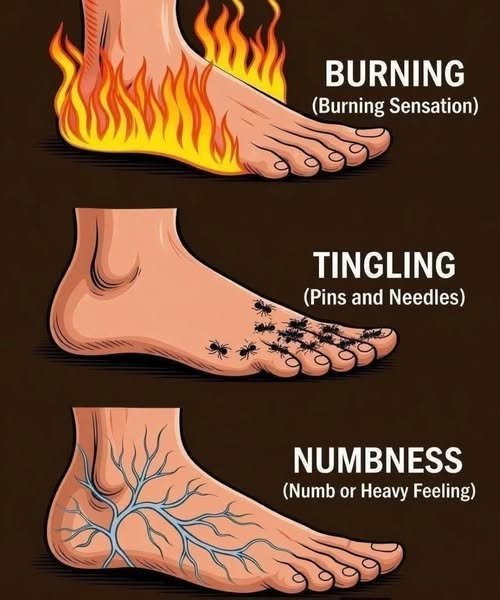
Numbness and Tingling (“Pins and Needles”):
-
What it means: Persistent numbness or burning sensations are classic red flags for peripheral neuropathy, frequently linked to undiagnosed or poorly managed diabetes, vitamin deficiencies (like B12), or nerve compression.
-
-
Pitting Edema (Swelling in Ankles and Feet):
-
What it means: When pressing a finger into your skin leaves a temporary indent, it indicates fluid retention. This can stem from simple issues like prolonged standing, but persistent swelling is a key warning sign for venous insufficiency, kidney strain, or heart function changes.
-
-
Slow-Healing Sores or Cracks:
-
What it means: Cuts, blisters, or ulcers on the feet that take weeks to heal—especially when combined with numbness—are a major clinical sign of compromised circulation and elevated blood sugar.
-
-
Hairless Toes and Shiny Skin:
-
What it means: Losing the hair on your toes and feet and noticing tight, shiny skin isn’t just a cosmetic quirk; it often reflects chronic ischemia (severe lack of proper blood supply over time).
-
The Reality Check: Listening to Your Body Without Panicking
While individual foot quirks can happen from wearing tight shoes or a hard day of walking, persistent, systemic changes should never be ignored.
-
Check Your Baseline: Regularly inspecting your feet for changes in temperature, color, skin texture, and sensation is a powerful habit—especially for individuals managing metabolic health or diabetes.
-
Consult a Professional: If you notice persistent numbness, swelling that doesn’t resolve with rest, or wounds that won’t heal, a podiatrist or primary care physician can run targeted tests (such as vascular checks or blood panels) to find the root cause.
Are you noticing any specific physical changes in your feet, or looking into general diagnostic health indicators?