🩺 What Is Normal Blood Pressure at Each Age?
A common misconception is that older adults are supposed to have much higher “normal” blood pressure. For adults, the current American Heart Association guideline uses the same basic categories regardless of age. (professional.heart.org)
| Age | Generally desirable/normal |
|---|---|
| Children | Depends on age, sex, and height |
| Teenagers ≥13 | <120/80 mmHg |
| Adults 18–64 | <120/80 mmHg |
| Adults 65–79 | <120/80 mmHg is still classified as normal |
| Adults 80+ | Individual treatment goals may differ, but <120/80 is the normal category |
For adults, know these numbers
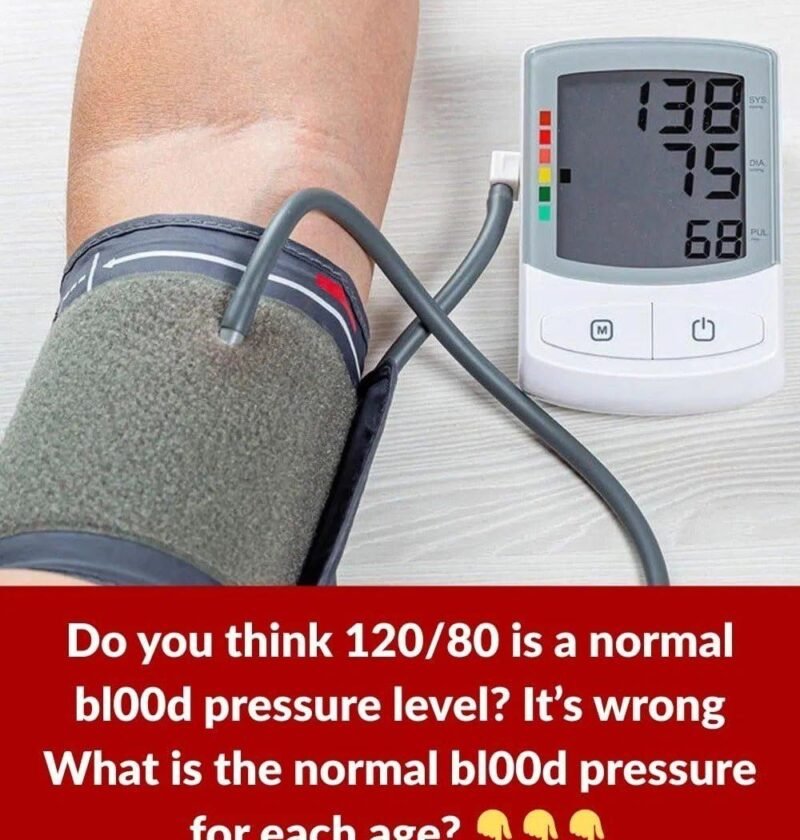
- 🟢 Normal: less than 120/80
- 🟡 Elevated: 120–129 systolic and less than 80 diastolic
- 🟠 Stage 1 hypertension: 130–139 or 80–89
- 🔴 Stage 2 hypertension: 140 or higher or 90 or higher (professional.heart.org)
The higher category applies if the top and bottom numbers fall into different categories.
👶 Children are different
There isn’t one “normal” blood pressure number for every child. For children under 13, blood pressure is interpreted according to age, sex, and height percentiles. (www.heart.org)
🚨 When is it dangerously high?
A reading above 180/120 mmHg is considered severe hypertension. If it occurs with chest pain, shortness of breath, weakness/numbness, vision changes, back pain, or difficulty speaking, seek emergency medical care immediately. (American Heart Association)
Important: One unusual reading doesn’t necessarily mean you have hypertension. Blood pressure should generally be assessed from properly taken repeated readings, rather than a single measurement. (professional.heart.org)