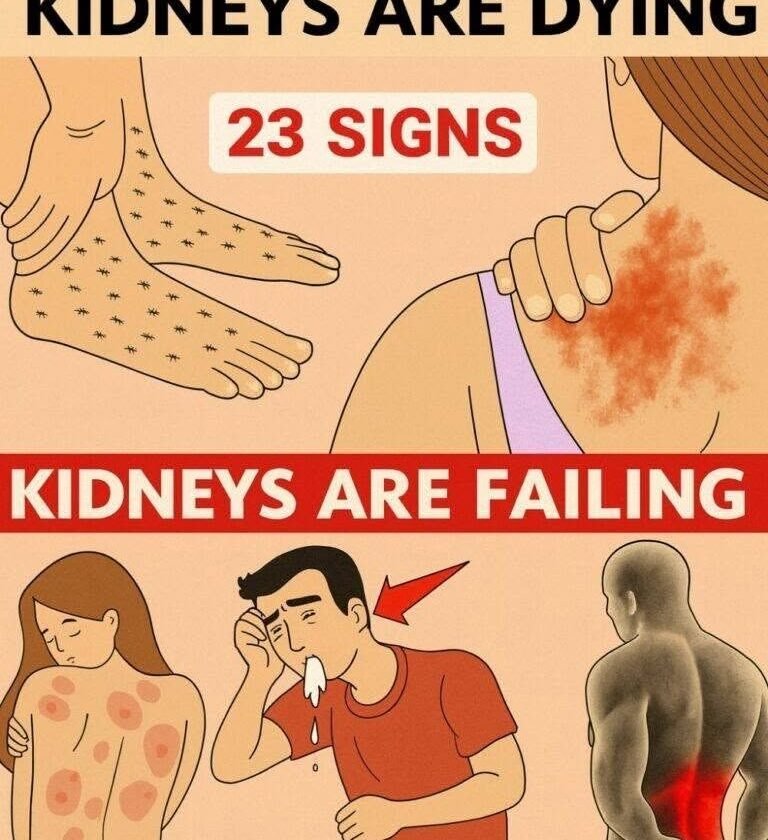
While kidney disease is often called a “silent killer” because early stages typically present few or no symptoms, failing kidneys eventually trigger a wide array of systemic, unusual, and surprising signs throughout the body.
The comprehensive list below details both common and strange signs that your kidneys may be in trouble:
1. Urinary & Fluid Changes
-
Foamy or Frothy Urine: Looking like scrambled eggs, this foam indicates an excess of protein (usually albumin) leaking through damaged kidney filters.
-
Hematuria (Blood in the Urine): Damaged filters allow red blood cells to “leak” into your urine, making it look pink, brown, or red.
-
Nocturia (Nighttime Urination): Frequently waking up during the night to pee happens because the kidneys’ concentrating ability is impaired.
-
Periorbital Edema (Puffy Eyes): Persistent swelling around the eyes, especially in the morning, caused by a heavy leakage of protein into the urine.
-
Peripheral Edema (Swollen Ankles and Feet): Fluid and sodium retention due to poor kidney clearance leads to swelling in the lower extremities.
2. Skin, Hair, and Nail Anomalies
-
Uremic Frost: In advanced kidney failure, urea and other waste products can be excreted through sweat, leaving a powdery, frost-like white residue on the skin.
-
Calcinosis Cutis: The buildup of excess minerals (like calcium and phosphorus) can form hard, painful white bumps under the skin.
-
Half-and-Half Fingernails (Lindsay’s Nails): A distinct discoloration where the bottom half of the nails appears white and the top half appears reddish-brown or pink, commonly associated with chronic kidney disease.
-
Severe, Unrelenting Itching (Pruritus): Caused by an accumulation of waste toxins in the blood and mineral imbalances (high phosphorus) that standard lotions cannot fix.
-
Easy Bruising and Thin Skin: Altered blood chemistry and malnutrition can compromise skin integrity and platelet function.
3. Neurological & Musculoskeletal Quirks
-
Restless Legs Syndrome (RLS): An uncomfortable, irresistible urge to move the legs, heavily correlated with toxin buildup and iron-deficiency anemia from kidney failure.
-
Persistent Muscle Cramps: Electrolyte imbalances—specifically abnormal levels of calcium, sodium, potassium, or phosphorus—disrupt nerve and muscle function.
-
Uremic “Brain Fog” and Confusion: Toxins circulating in the bloodstream can affect cognitive function, memory, and concentration.
-
Calcified Arteries / Bone Pain: Poor mineral regulation leads bones to leach calcium, causing bone pain, skeletal weakness, or calcification visible on X-rays.
4. Metabolic, Digestive, & General Signs
-
Metallic Taste and Ammonia Breath: A buildup of urea in the blood (uremia) can alter taste buds, make food taste metallic, and cause breath that smells faintly of urine or ammonia.
-
Anorexia and Loss of Appetite: Toxins circulating in the gut frequently trigger nausea, vomiting, and a general revulsion toward food (especially meats).
-
Fatigue and Weakness (Anemia): Healthy kidneys produce erythropoietin (EPO), a hormone telling the body to make oxygen-carrying red blood cells. Failing kidneys produce less EPO, leading to profound anemia and exhaustion.
-
Shortness of Breath: Can stem from two distinct issues: severe anemia (lack of oxygen) or fluid backing up into the lungs.
-
Feeling Constantly Cold: Chronic anemia frequently causes individuals to feel chilled even when others are warm.
-
Trouble Sleeping (Insomnia): Often tied to toxin-induced restlessness, discomfort, or a high prevalence of sleep apnea among people with compromised kidney function.
-
High Blood Pressure (Hypertension): While high blood pressure is a cause of kidney damage, it is also a sign because the kidneys help regulate blood pressure. Failing kidneys release hormones that push pressure even higher.
-
Unexplained Weight Loss: Rapid, unintentional dropping of pounds due to persistent nausea, dietary restrictions, and muscle wasting.
-
Hiccups (Persistent): Though less common, intractable, long-lasting hiccups can occasionally signal severe uremia and advanced metabolic distress from kidney failure.
What should you do?
Many of these signs overlap with other common medical conditions (like diabetes, thyroid issues, or vitamin deficiencies). However, if you or someone you know is experiencing a combination of these symptoms—especially swelling, foamy urine, or chronic fatigue—a routine blood test (checking creatinine and eGFR) and a simple urine test (checking for protein) can quickly evaluate kidney health.
Are you or someone you know currently experiencing any specific symptoms that prompted you to look into this?