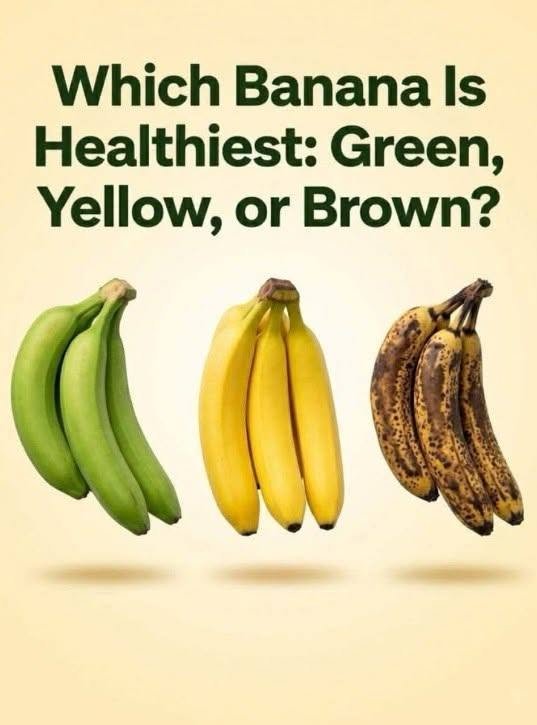
When it comes to bananas, there is no single “healthiest” choice overall. Instead, the nutritional profile of a banana shifts as it ripens, meaning the best one for you depends entirely on your specific nutritional goals, digestion needs, and blood sugar management.
The Ripeness Spectrum: Green to Brown
As a banana ripens from firm and green to spotted and yellow-brown, its chemical composition changes:
1. The Underripe (Green) Banana
-
Nutritional Profile: Higher in resistant starch, a type of dietary fiber that resists being broken down in the small intestine.
-
Health Benefits:
-
Lower Glycemic Index (GI): Because the starches haven’t yet converted to simple sugars, green bananas cause a slower, more gradual rise in blood sugar, making them a better option for people monitoring blood glucose.
-
Gut Health: Resistant starch acts as a prebiotic, traveling to the large intestine where it feeds beneficial gut bacteria.
-
-
The Trade-off: They are firmer, less sweet, and can be harder to digest for people with sensitive stomachs.
2. The Perfectly Ripe (Yellow) Banana
-
Nutritional Profile: The starches have mostly converted into natural sugars (fructose, glucose, and sucrose), and antioxidant levels reach their peak.
-
Health Benefits:
-
Easy Digestion: Yellow bananas are much gentler on the digestive tract, making them ideal when recovering from an upset stomach or looking for quick-digesting energy.
-
High Antioxidants: As bananas yellow, their concentration of disease-fighting antioxidants increases.
-
3. The Overripe (Brown-Spotted / Speckled) Banana
-
Nutritional Profile: Highest in simple sugars and lowest in resistant starch; very soft and sweet.
-
Health Benefits:
-
Rapid Energy: Because the starches are fully broken down into simple sugars, the body absorbs them almost immediately—making them a favorite quick pre-workout fuel for athletes.
-
Higher Immune Support: Some studies suggest that heavily speckled bananas contain higher levels of Tumor Necrosis Factor (TNF), which helps combat abnormal cells, alongside peak levels of simple antioxidants.
-
-
The Trade-off: They have the highest glycemic impact, causing a quicker spike in blood sugar, and lose much of their original fiber benefit.
Summary: Which One Should You Choose?
-
Choose Green or Firm Yellow if you are watching your blood sugar, trying to stay full longer, or looking to feed your gut microbiome with resistant starch.
-
Choose Yellow or Spotty Yellow if you want easy digestion, peak antioxidants, and a great balance of flavor and nutrition.
-
Choose Brown-Spotted if you need instant energy for athletic performance or are baking healthy treats (where their natural sweetness shines).
Regardless of the stage of ripeness you prefer, every banana delivers a solid dose of potassium, Vitamin B6, Vitamin C, and magnesium, making any banana a healthy addition to a balanced diet!