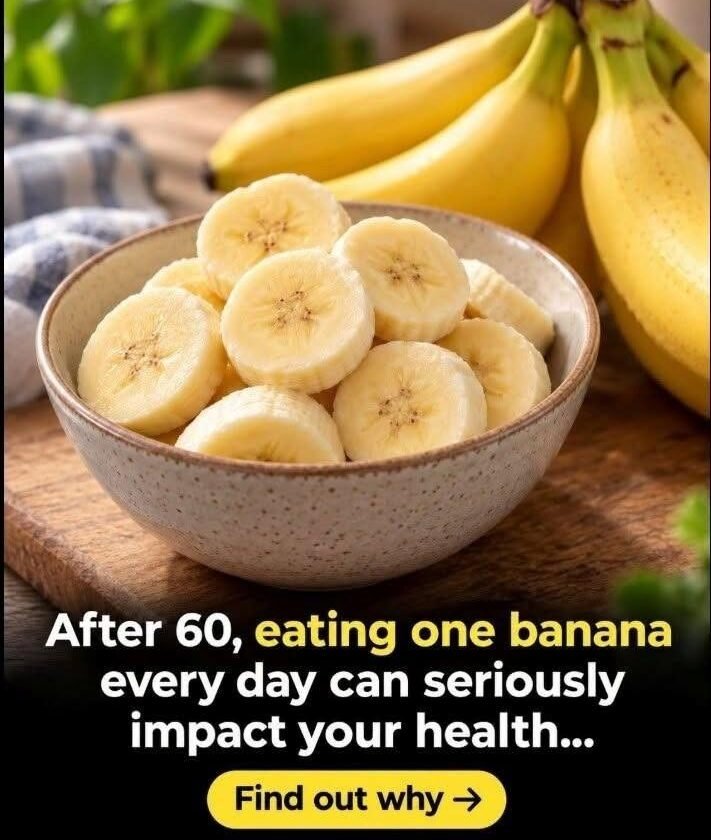
Viral health videos love to use dramatic clickbait hooks—like warning that eating a banana a day after age 60 “causes” some sudden, hidden danger—to drive clicks and shares.
While aging naturally changes how our bodies process certain nutrients and medications, a daily banana is generally a healthy, nutrient-dense choice for most older adults. However, there are a few nuanced physiological reasons why people over 60 (or anyone taking specific medications) should pay attention to how bananas fit into their overall diet.
What Eating a Banana a Day Actually “Causes” in the Body
-
A Reliable Boost of Potassium and Blood Pressure Support:
-
Bananas are famous for their potassium content. Potassium helps the body manage sodium levels and eases tension in blood vessel walls, supporting healthy blood pressure—which becomes increasingly important for cardiovascular health as we age.
-
-
Steady Digestive Fiber:
-
A medium banana provides around 3 grams of dietary fiber, supporting regular bowel motility and feeding beneficial gut microbes.
-
-
Caloric and Carbohydrate Impact:
-
A standard banana contains about 105 calories and roughly 27 grams of carbohydrates (mostly natural sugars). For older adults managing pre-diabetes or Type 2 diabetes, a daily banana won’t wreck blood sugar if it fits into their carbohydrate allowance, but eating it alongside a protein or healthy fat (like peanut butter or Greek yogurt) helps blunt a sharp glucose spike.
-
When to Be Cautious (Medical Nuances After 60)
While bananas are wholesome whole foods, certain medical conditions and prescriptions common in older adults require more careful monitoring of potassium and sugar intake:
-
Medications That Raise Potassium (ACE Inhibitors & ARBs):
-
Many people over 60 take blood pressure medications known as ACE inhibitors (like lisinopril) or ARBs (like losartan), or potassium-sparing diuretics. These medications reduce the kidneys’ ability to excrete potassium. Adding high-potassium foods like bananas in excessive quantities can occasionally lead to elevated blood potassium levels (hyperkalemia), which affects heart rhythm.
-
-
Chronic Kidney Disease (CKD):
-
As kidney function naturally declines with age or disease, the kidneys become less efficient at filtering excess potassium out of the blood. If a doctor has advised a low-potassium diet due to impaired kidney function, portion control or swapping to lower-potassium fruits (like berries or apples) may be necessary.
-
The Bottom Line
For a healthy older adult with normal kidney function and balanced medication regimens, eating a banana a day is a wonderful, convenient source of energy, potassium, vitamin B6, and vitamin C.
As with any food, moderation and context matter most—if you have specific concerns about your kidney health or prescription interactions, a quick chat with your doctor or pharmacist can help you find your ideal nutritional sweet spot!