Which Banana Is Actually the Healthiest? 🍌
There isn’t one banana variety that’s universally “the healthiest.” Ripeness may matter more than the variety for some nutritional goals.
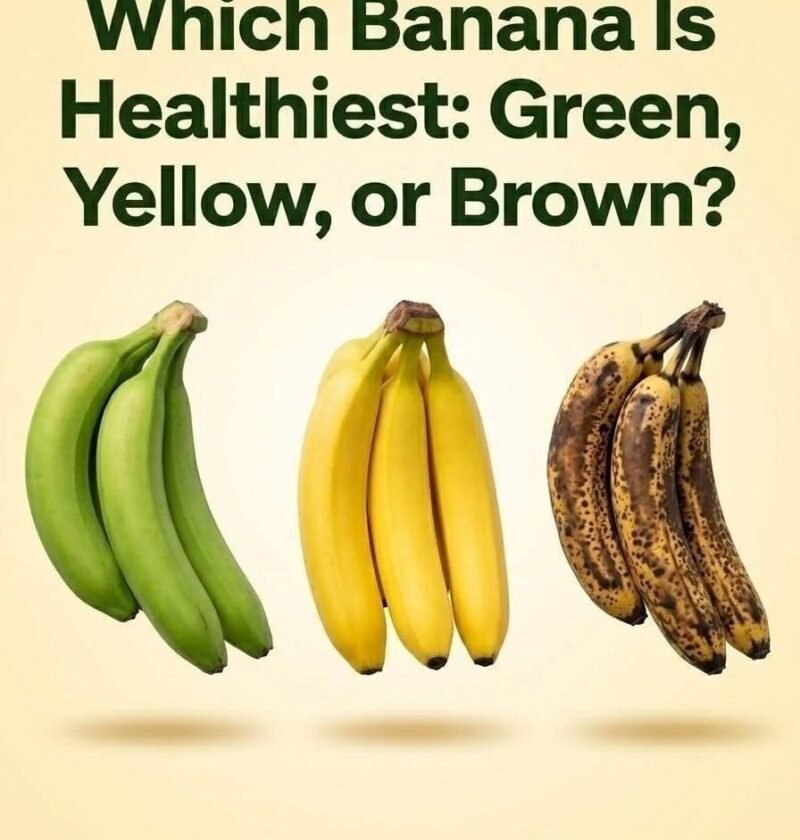
🟢 Green or slightly underripe bananas: Best if you’re looking for resistant starch, a type of carbohydrate that is digested more slowly and can support gut health. Green bananas contain considerably more resistant starch than ripe ones.
P
PubMed
+1
🟡 Yellow bananas: A great all-around choice. As bananas ripen, starch is converted into sugars, making them sweeter and softer. They’re still nutritious and provide fiber and minerals.
🟤 Very ripe bananas: Higher in readily available sugars and lower in resistant starch. They’re excellent for smoothies, oatmeal and baking, but may produce a greater blood-glucose response than less-ripe bananas. Small human studies support this difference.
P
PubMed
🍌 Different varieties: There isn’t convincing evidence that one common dessert banana variety is dramatically healthier than all the others. Nutrient composition varies among cultivars, but overall dietary pattern matters much more.
P
PubMed
+1
So which should you choose?
For gut health and slower digestion: choose a firm, slightly green banana.
For a convenient everyday fruit: choose a yellow banana you enjoy.
For baking or a naturally sweet snack: a ripe, spotted banana works perfectly.
And don’t worry about finding a “perfect” banana. Bananas are nutritious whole fruits, and the healthiest choice is usually the one that fits your dietary needs and that you’ll actually eat. USDA FoodData Central provides the current nutrient-composition database for foods.
F
FoodData Central
One caution: if you have diabetes or need to closely manage blood glucose, portion size and what you eat alongside the banana can matter more than simply avoiding ripe bananas.
P
F
Sources