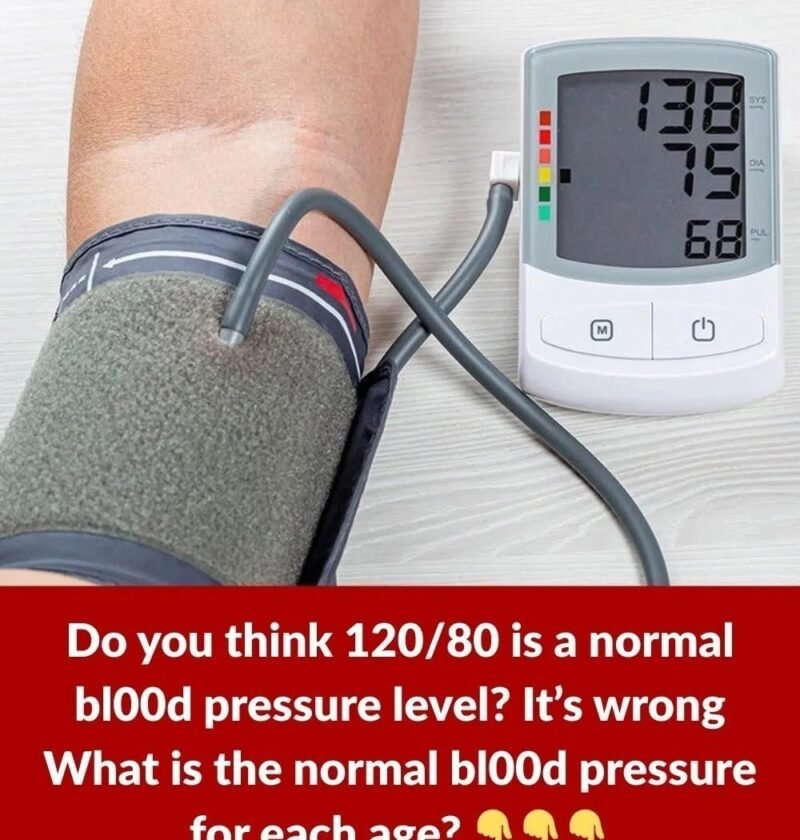
If you’re looking for a clear age-by-age guide, there is an important point: for adults, there isn’t a different “normal” blood-pressure target for every age. Current adult guidelines generally define normal blood pressure as below 120/80 mmHg, regardless of whether someone is 25, 45, 65, or 80. (professional.heart.org)
Normal blood pressure by age
| Age | General interpretation |
|---|---|
| Children under 13 | Depends on age, sex, and height; there is no single number. (NHLBI, NIH) |
| 13–17 | Adult-style thresholds are increasingly used, but interpretation can depend on the guideline and clinical context. |
| 18–39 | Normal: <120/80 mmHg |
| 40–59 | Normal: <120/80 mmHg |
| 60–79 | Normal: <120/80 mmHg |
| 80+ | <120/80 is still classified as normal, but treatment targets may be individualized based on overall health. |
What do the numbers mean?
- Less than 120/80: Normal
- 120–129 and <80: Elevated
- 130–139 or 80–89: Stage 1 hypertension
- ≥140 or ≥90: Stage 2 hypertension (www.heart.org)
Don’t judge blood pressure from one reading alone. Repeated measurements, taken correctly, are much more useful.
If you give me the person’s age and their blood-pressure reading (for example, 68 years old, 145/88), I can explain exactly what it means.