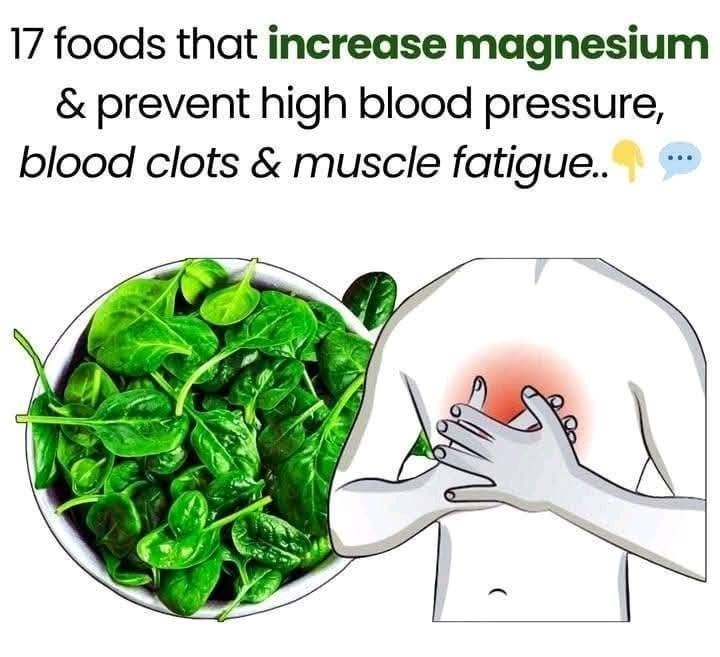
If you’re looking for a health article or social-media post, the headline needs a little nuance: magnesium is important for normal muscle and nerve function and contributes to healthy blood pressure, but no food can guarantee prevention of high blood pressure or blood clots.
17 Magnesium-Rich Foods to Add to Your Diet
Pumpkin seeds — one of the richest common food sources of magnesium.
Chia seeds — easy to add to oatmeal, yogurt, or smoothies.
Almonds — provide magnesium along with healthy fats and fiber.
Cashews — a convenient magnesium-rich snack.
Peanuts — contain magnesium as well as protein and unsaturated fats.
Black beans — a good combination of magnesium, fiber, and plant protein.
Edamame — provides magnesium plus protein and fiber.
Lentils — an inexpensive source of magnesium and other minerals.
Spinach — leafy greens can contribute substantially to daily magnesium intake.
Swiss chard — another magnesium-rich leafy vegetable.
Avocado — supplies magnesium, potassium, and beneficial fats.
Dark chocolate — chocolate with a high cocoa percentage can be magnesium-rich; choose portions wisely because it can also contain considerable calories and added sugar.
Tofu — provides magnesium and plant protein.
Whole grains — brown rice, oats, and whole-wheat products retain more minerals than refined grains.
Plain yogurt — contributes magnesium along with calcium and protein.
Bananas — contain some magnesium and are particularly well known for their potassium content.
Fatty fish — salmon and other fish provide magnesium along with protein and heart-healthy fats.
❤️ What magnesium can—and can’t—do
Adequate magnesium is important for normal muscle and nerve function, and dietary patterns rich in magnesium-containing foods are associated with better cardiovascular health. However, eating these foods doesn’t guarantee that you won’t develop hypertension or blood clots.
For blood-pressure protection, the overall dietary pattern matters. A diet rich in vegetables, fruits, whole grains, legumes, nuts, and other minimally processed foods—while limiting excess sodium and highly processed foods—is more useful than focusing on magnesium alone.
And if you’re concerned about blood clots, don’t rely on magnesium-rich foods as prevention. Blood-clot risk depends on factors such as certain medical conditions, surgery, prolonged immobility, pregnancy, and some medications. Sudden leg swelling/pain, chest pain, or unexplained shortness of breath warrants prompt medical attention.