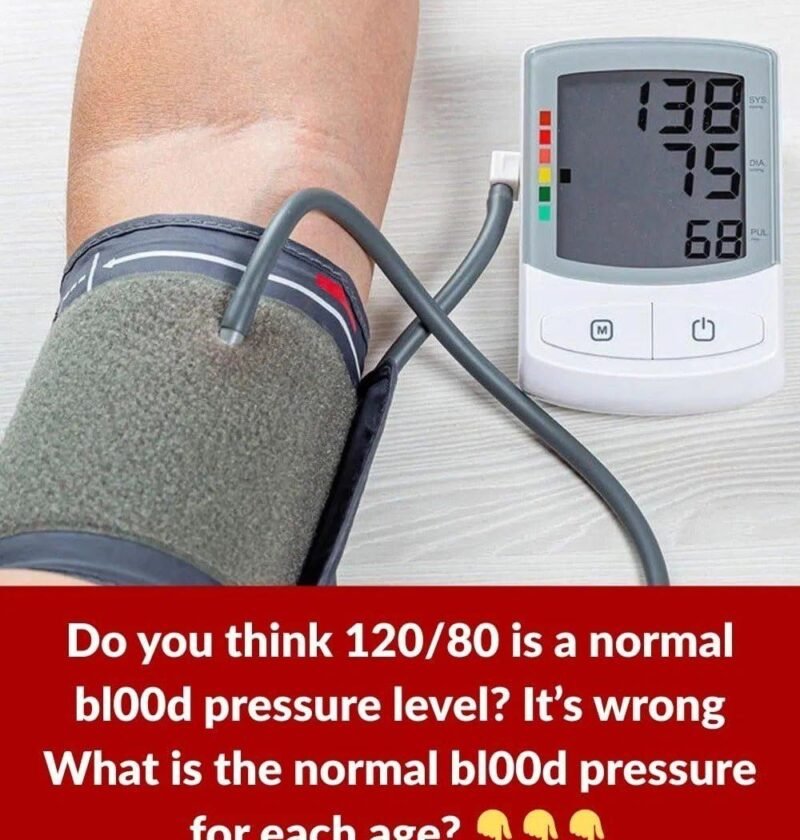
Blood pressure doesn’t have a single “normal” number for each age. For adults, the same general categories are used regardless of age, although blood pressure tends to rise with age.
Normal blood pressure by age
| Age | Generally healthy range* |
|---|---|
| Children | Varies substantially by age, sex, and height |
| Teens (13–17) | Usually <120/80 mmHg |
| Adults (18+) | <120/80 mmHg |
| Older adults (65+) | Often still <120/80 mmHg, but treatment targets may be individualized |
*For adults, normal is generally defined as systolic <120 and diastolic <80 mmHg.
Adult blood-pressure categories
-
Normal: <120 / <80
-
Elevated: 120–129 / <80
-
High blood pressure, stage 1: 130–139 or 80–89
-
High blood pressure, stage 2: ≥140 or ≥90
-
Very high: ≥180 and/or ≥120 — seek prompt medical attention, particularly if accompanied by chest pain, shortness of breath, weakness, confusion, vision changes, or severe headache.
A single reading doesn’t necessarily mean you have high blood pressure. It’s usually better to take two readings, 1 minute apart, while rested, and consider the pattern over several days.
If you tell me the person’s age and their blood-pressure reading (e.g., 145/85), I can explain what that reading means.