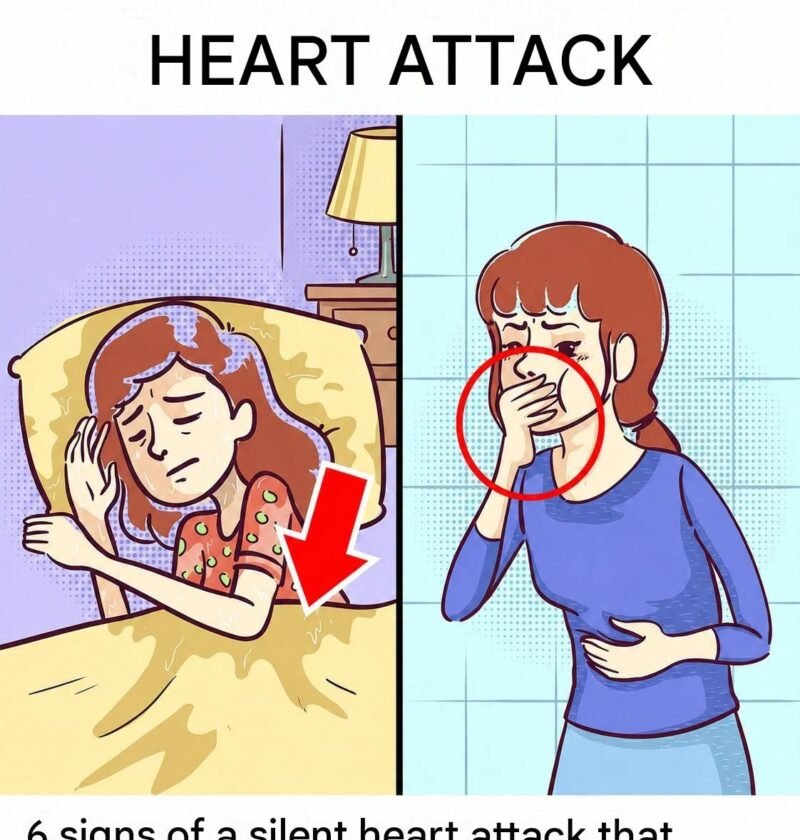
A silent heart attack (medically known as a silent myocardial ischemia) accounts for a significant percentage of all heart attacks. Because it lacks the dramatic, crushing chest pain portrayed in movies, it slips past detection, often only discovered later by accident on an EKG or heart scan.
Medical research shows that these events can mask themselves behind surprisingly ordinary, vague physical complaints. Six of the most commonly overlooked signs include:
1. Profound, Unexplained Fatigue
-
What it feels like: A sudden, crushing exhaustion where even simple tasks—like walking up a flight of stairs or carrying groceries—feel like running a marathon.
-
Why it’s missed: People routinely write it off as a bad night’s sleep, a stressful work week, burnout, or “just getting older”.
-
The cardiac link: When a coronary artery is blocked, the heart struggles to pump efficiently. The body responds by rationing blood flow, pulling it away from non-essential systems and sending it primarily to vital organs, leaving you feeling profoundly drained.
2. Vague Chest Pressure or “Fullness”
-
What it feels like: Not sharp pain, but a strange heaviness, a mild squeezing, tightness, or a sensation like someone is resting a heavy hand—or a tight band—right in the center of your chest. It may come and go over minutes or hours.
-
Why it’s missed: Because it doesn’t hurt intensely, people easily mistake it for muscle strain from the gym, poor posture, or anxiety.
3. Shortness of Breath During Light Activity
-
What it feels like: Catching yourself taking deep breaths or feeling winded after routine actions that normally wouldn’t phase you, such as making the bed or walking across a room.
-
Why it’s missed: It is frequently blamed on being out of shape, seasonal allergies, mild asthma, or aging.
4. Upper Body “Aches” (Jaw, Neck, Back, or Arms)
-
What it feels like: A dull, persistent ache or stiffness in the jaw, teeth, upper back, neck, or down one or both arms (not just the left).
-
Why it’s missed: A jaw ache is often brushed off as a dental issue or TMJ; back pain is blamed on a bad mattress or sitting at a desk; arm discomfort is mistaken for a pinched nerve.
-
The cardiac link: Nerves running from the heart share pathways with nerves in the upper spine, jaw, and arms. When the heart is starved of oxygen, the brain can misinterpret the distress signals as coming from nearby musculoskeletal structures (referred pain).
5. Persistent Indigestion, Nausea, or Bloating
-
What it feels like: A sudden bout of mild nausea, upper stomach burning, a sour upset stomach, or a weird feeling of bloating that mimics a bad meal.
-
Why it’s missed: It looks and feels identical to acid reflux, gastritis, or something you ate. It is especially common for women to experience digestive upset rather than classic chest pain during a cardiac event.
6. Sudden Cold Sweats (Diaphoresis)
-
What it feels like: Breaking out into a cold, clammy sweat or feeling suddenly chilled for no clear reason while sitting completely still.
-
Why it’s missed: People often attribute it to a passing hot flash, stress, anxiety, or feeling slightly under the weather.
-
The cardiac link: A struggling heart triggers a sympathetic nervous system “fight or flight” response, causing the body to break out into a cold sweat even if core body temperature is normal.
Who Is Most at Risk?
Silent heart attacks occur more frequently in older adults, individuals with diabetes (whose nerve damage from neuropathy can dull pain signals), and women, who tend to experience atypical symptoms.
If you or someone nearby experiences a sudden combination of these subtle symptoms—especially if they don’t go away with rest—it is always safest to seek immediate medical attention rather than waiting it out.