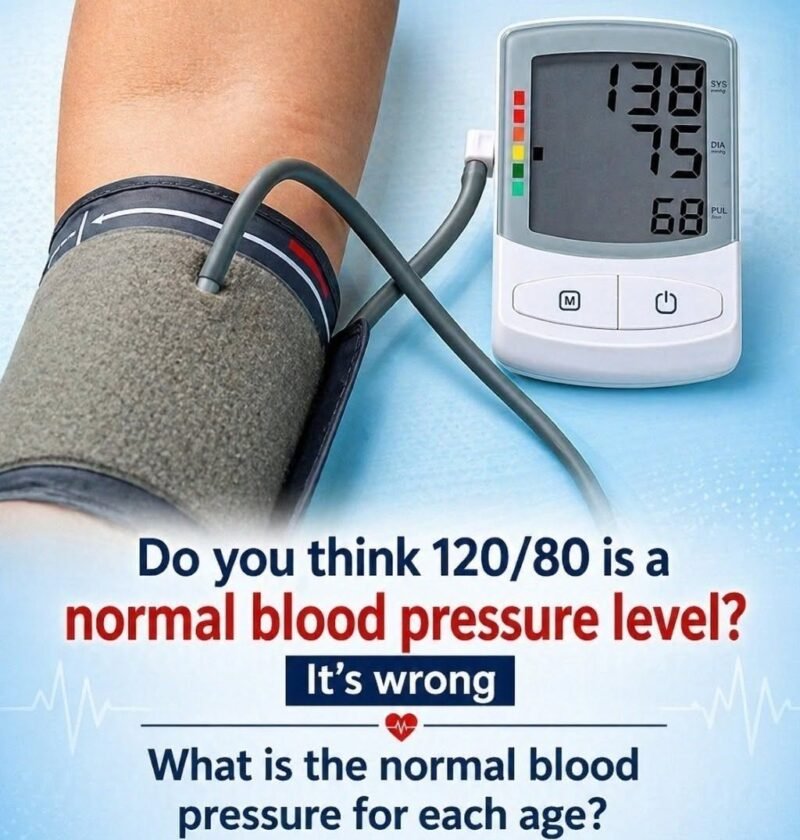
When looking at blood pressure, medical guidelines draw an important distinction between **what is medically ideal** and **what is statistically average** for different age groups.
According to major cardiovascular organizations (such as the American Heart Association and the American College of Cardiology), the universal standard for **normal, healthy adult blood pressure is less than 120/80 mm Hg**, regardless of your age.
### Standard Adult Blood Pressure Categories
For any adult (from age 18 onward), readings are generally broken down into these categories:
* **Normal:** Less than 120 / less than 80 mm Hg
* **Elevated:** 120–129 / less than 80 mm Hg
* **Hypertension Stage 1:** 130–139 / 80–89 mm Hg
* **Hypertension Stage 2:** 140 or higher / 90 or higher mm Hg
### Why Do Age-Based Charts Look Different?
If you search online, you will often find charts showing that average blood pressure rises as people get older (for instance, an average healthy person in their 70s might commonly read around 130–140 systolic).
* **Average vs. Ideal:** While blood pressure *does* typically drift upward over the decades—primarily because arteries naturally stiffen with age—**statistically common does not mean medically optimal.** Higher pressures still increase long-term strain on the heart and blood vessels.
* **Senior Considerations:** For older adults (especially those over 65 or 80), doctors sometimes individualize treatment targets. While a lower reading is still ideal, clinicians balance goals carefully to prevent dizziness, fainting, or fall risks from medications.
### Children and Teenagers
Blood pressure targets for children and adolescents (ages 1 to 18) are entirely different from adults. Because normal ranges depend heavily on a child’s **age, height, and sex**, pediatricians use specialized percentile charts rather than a single fixed number to determine what is healthy.
Are you looking at a specific blood pressure reading for yourself or a family member?