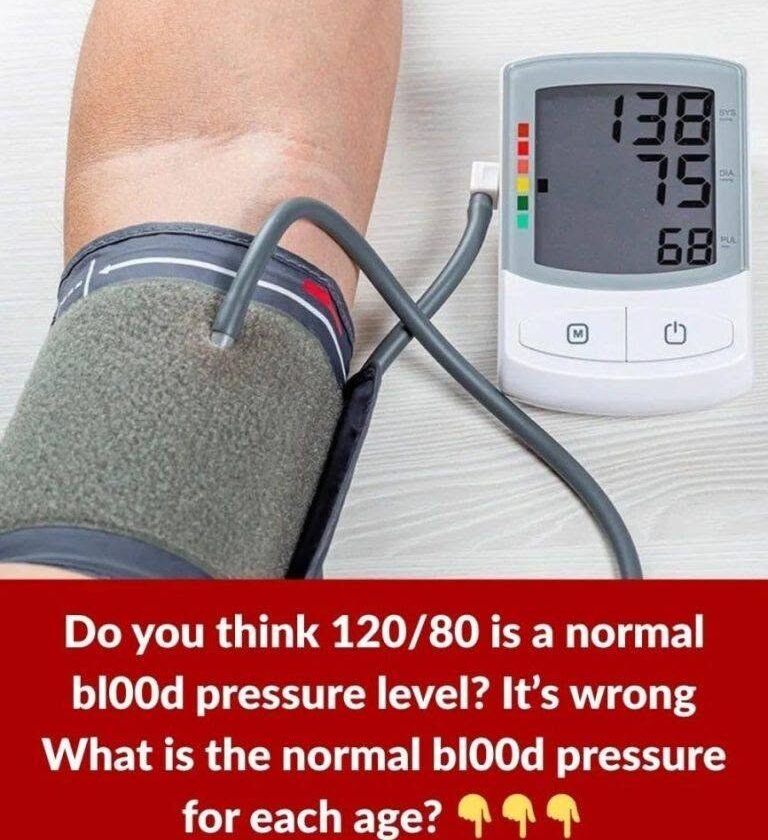
When people look up “normal blood pressure by age,” they often expect to see a rising chart where higher numbers automatically become acceptable simply because someone is getting older. However, major medical guidelines (such as those from the American Heart Association and the American College of Cardiology) state that the optimal blood pressure remains relatively consistent for healthy adults, regardless of age.
While it is true that blood vessels naturally stiffen over time—often causing systolic (top number) blood pressure to creep up—a reading that falls into the high blood pressure category is not considered healthy just because of age.
Standard Adult Blood Pressure Categories (Ages 18 and Older)
Instead of shifting targets for every decade of life, doctors classify adult blood pressure into these standardized ranges:
-
Normal: Less than 120 / less than 80 mm Hg
-
Elevated: 120–129 / less than 80 mm Hg
-
Stage 1 Hypertension: 130–139 / 80–89 mm Hg
-
Stage 2 Hypertension: 140 or higher / 90 or higher mm Hg
-
Hypertensive Crisis (Emergency): Higher than 180 / higher than 120 mm Hg (Requires immediate medical attention)
How Age Actually Factors In
While the clinical thresholds don’t change dramatically from age 30 to age 80, a physician’s approach to treatment does adapt based on age and overall health:
-
Younger Adults (18–39): The focus is heavily on prevention, lifestyle habits (diet, exercise, stress management), and keeping readings consistently in the normal range to prevent long-term vessel damage.
-
Older Adults (65 and Older): Blood pressure management becomes a delicate balancing act. Doctors often tolerate slightly higher targets for frail older adults to prevent dizziness, fainting, or falls caused by medications lowering blood pressure too aggressively. For instance, treatment goals for healthy seniors are often kept below 130/80 mm Hg, but customized based on individual tolerance.
Children and Teens Are Different
The rule that “numbers don’t change by age” applies strictly to adults. For infants, children, and adolescents, normal blood pressure does change as they grow. Pediatric blood pressure is determined using charts that factor in a child’s age, height, and gender, because a healthy blood pressure for a 5-year-old is vastly different from that of a 15-year-old.
Are you looking at blood pressure guidelines for yourself, an older adult family member, or a growing child?