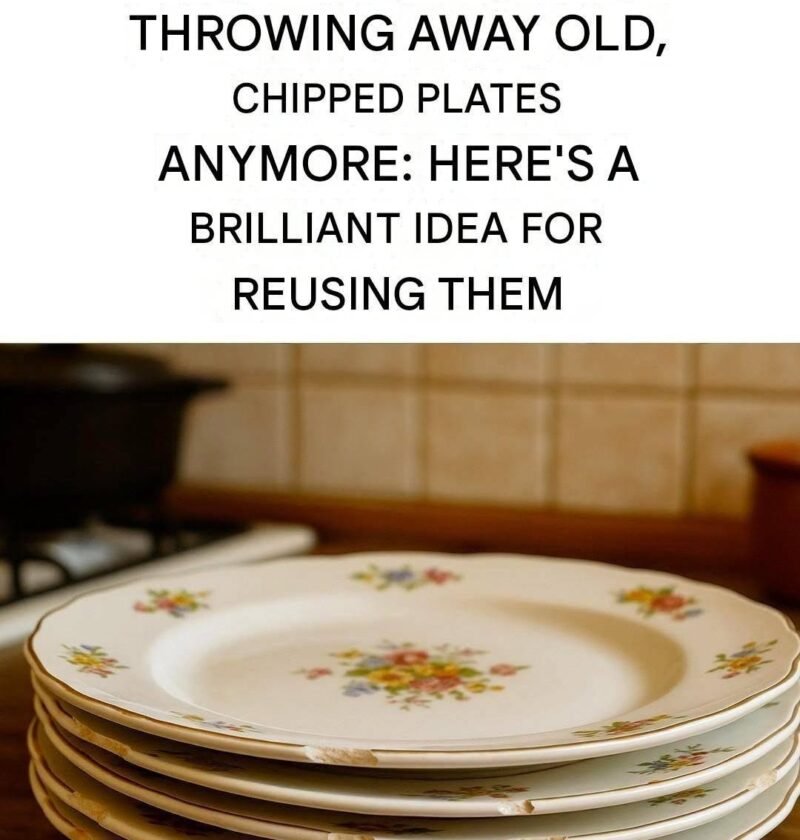
Old ceramic, porcelain, or glass plates cannot safely be turned into cutting boards or heated cookware—and chipped or crazed glazes trap bacteria and may leach lead in vintage pieces—so the cleanest, longest-lasting reuse ideas turn them into wall displays, tiered serving stands, garden stepping stones, or mosaic surfaces rather than high-wear food prep tools.
Clickbait DIY posts promising “How to reuse old plates: the original idea” often show viral hacks like gluing plates together with hot glue for heavy cake stands, drilling plates without water cooling (which shatters porcelain), or using cracked vintage plates for hot meals. Matching the project to the plate’s material and condition keeps the piece durable and safe.
Practical Ways to Reuse Old Plates (By Condition)
| Plate Condition | Best Reuse Ideas | Key Safety & Durability Rule |
| Intact, unchipped plates (mismatched vintage or inherited sets) |
• Gallery wall display using spring-loaded wire plate hangers or adhesive disc hangers
• 2- or 3-tier afternoon tea / jewelry stand using a proper metal center-rod hardware kit and diamond-core drill bit
|
Never use hot glue or standard craft glue for tiered stands—use a threaded metal rod kit with silicone washers so weight rests on hardware, not glue. |
| Chipped, cracked, or “crazed” (fine spiderweb glaze lines) plates |
• Under-pot plant saucers to catch indoor watering drips
• Vanity catch-all tray for keys, watches, or jewelry
• Birdbath basin mounted on an overturned terracotta pot outdoors
|
Retire chipped or crazed plates from direct food use—micro-cracks harbor bacteria and moisture, and pre-1970s/decorative glazes can leach lead into acidic foods. |
| Broken or shattered plates | • Mosaic tabletop, mirror frame, or garden stepping stones (pique assiette mosaic) set in outdoor tile mortar and sanded grout | Wear safety glasses and thick work gloves when nipping ceramic shards, and seal outdoor grout once cured so freeze-thaw moisture doesn’t lift pieces. |
How to Drill a Ceramic Plate Without Cracking It (For Tiered Stands or Planters)
If you are making a tiered tray or adding drainage holes to turn a deep plate/bowl into a succulent planter:
-
Place painter’s tape over the drill spot: Stick an “X” of masking or painter’s tape on the glazed surface so the drill bit doesn’t skate across the slick glaze.
-
Use a diamond-core hole saw bit + water cooling: Standard wood or metal bits will shatter ceramic. Keep a shallow puddle of water (or a wet sponge) right over the bit to prevent overheating.
-
Start at a 45-degree angle at low speed: Let the edge of the diamond bit score a small groove first, then slowly tilt upright to 90 degrees with light, steady pressure—never force the bit through the back.