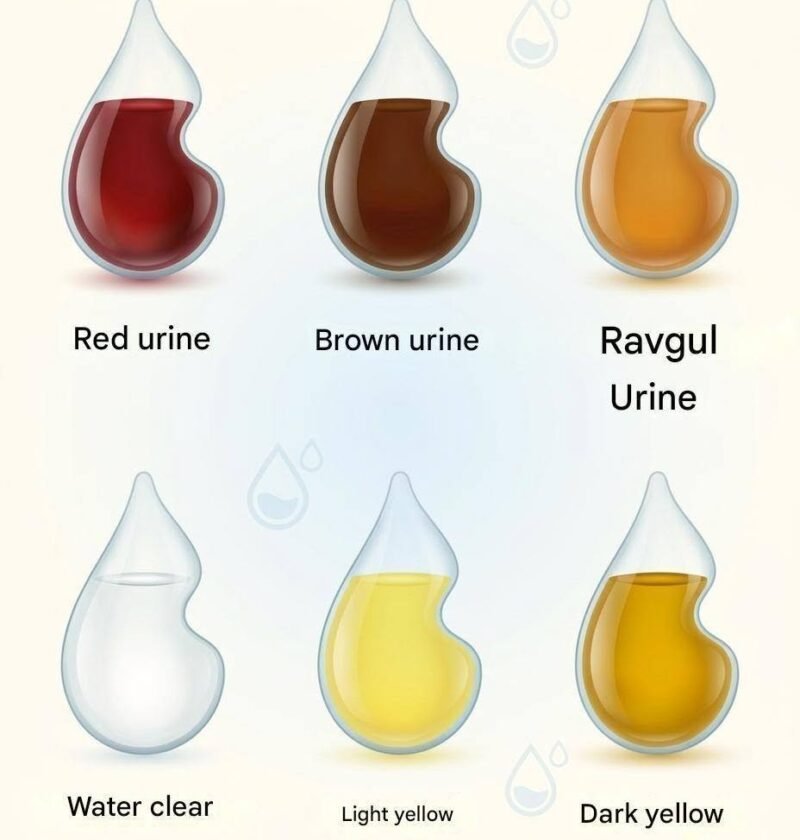
The color of your urine is a helpful, real-time indicator of your hydration levels and overall health. Changes in color are usually harmless and tied to what you eat, drink, or take as supplements, but they can sometimes signal an underlying medical issue.
Urine Color Guide
-
Transparent / Clear: You are likely over-hydrated (drinking more water than your body needs). While staying hydrated is great, drinking excessive water can dangerously dilute essential electrolytes in your blood.
-
Pale Straw to Transparent Yellow: This is the ideal healthy range. It indicates you are well-hydrated and your body is properly balanced.
-
Dark Yellow / Amber / Honey: You are mildly dehydrated. Your body is conserving water, causing your urine to become more concentrated. It’s time to drink a glass of water.
-
Dark Brown / Cola-Colored: This can indicate severe dehydration, or it may point to liver disease, bile issues, or the breakdown of muscle tissue (rhabdomyolysis). If drinking water doesn’t clear this up quickly, contact a doctor.
-
Pink / Red / Reddish-Brown: While this can simply be the result of eating beets, blackberries, or rhubarb, it can also signal blood in the urine (hematuria). This requires medical evaluation to rule out urinary tract infections, kidney stones, or other conditions.
-
Orange: Often caused by dehydration, certain medications (like rifampin or some laxatives), or heavy intake of vitamin B supplements or carrots.
-
Blue / Green: This is rare and almost always caused by food dyes, certain medications, or specific types of bacterial urinary tract infections.
-
Cloudy or Murky: This typically indicates a urinary tract infection (UTI), kidney stones, or dehydration. If it persists or is accompanied by burning or a foul odor, consult a healthcare provider.
When to See a Doctor
While temporary changes linked to food or hydration are normal, you should seek medical advice if you notice:
-
Blood in your urine that doesn’t go away.
-
Urine that is dark brown, cloudy, or foul-smelling for more than a day or two without an obvious dietary cause.
-
Urine color changes accompanied by fever, pain, burning during urination, persistent fatigue, or swelling.
Are you noticing a specific color change right now, or are you looking into this out of general curiosity