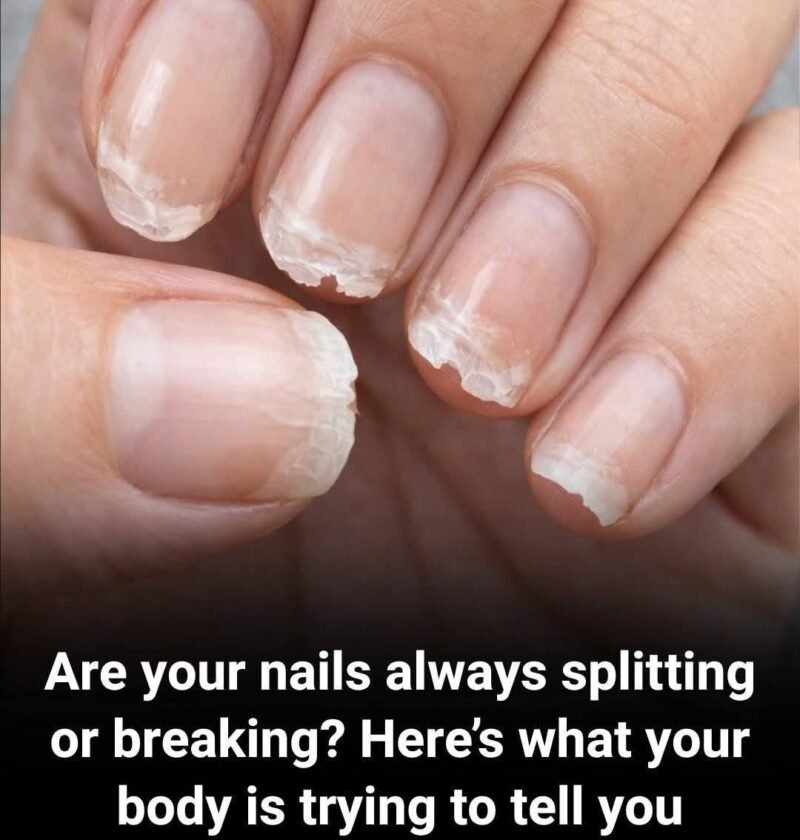
We often think of fingernails as just a canvas for a manicure, but dermatologists and physicians view them as a tiny diagnostic window into your overall health. When your nails consistently start splitting, peeling, cracking, or breaking under the slightest pressure, it is often your body’s way of signaling that something is out of balance.
Weak or brittle nails generally stem from one of two categories: external habits or internal health signals. Here is what your nails might be trying to tell you.
1. Common External Culprits (Environmental & Lifestyle)
Before looking internally, doctors look at what your hands encounter every day. Nails act like tiny sponges—they actually absorb moisture and chemicals much faster than your skin does.
-
The “Wet-Dry” Cycle: Constantly washing your hands, doing dishes without gloves, or swimming frequently forces nails to repeatedly expand with water and rapidly contract as they dry out. This constant shifting breaks down the structural bonds of the nail keratin, causing peeling and splitting (a condition called onychoschizia).
-
Harsh Chemicals and Cosmetics: Frequent use of acetone-based nail polish removers, harsh household cleaning detergents, or long-term wear of acrylic and gel manicures strip away the nail’s natural protective lipid barrier.
2. Nutritional Deficiencies (Internal Signals)
If your toenails are also brittle, peeling, or weak alongside your fingernails, the root cause is much more likely to be internal. Key nutritional shortfalls include:
-
Iron Deficiency (Anemia): Low iron reduces the oxygen-carrying capacity of your blood, starving rapidly dividing nail matrix cells. This can lead to thin, brittle nails, or in more severe cases, koilonychia (spoon-shaped nails that curve upward).
-
B-Vitamins (Especially Biotin / B7): Biotin plays a direct role in building keratin. A shortage can leave nails fragile and prone to vertical splitting.
-
Zinc or Protein Shortages: Zinc is crucial for tissue growth and cellular repair. Low zinc or insufficient daily protein intake can result in slow-growing, weak, and easily cracked nails.
3. Underlying Medical Conditions
Sometimes, persistent nail weakness points to a systemic shift in health:
-
Thyroid Imbalances: Both an underactive thyroid (hypothyroidism) and an overactive thyroid slow down your body’s metabolic turnover, frequently resulting in dry, brittle, slow-growing nails that crack easily.
-
Circulatory Issues: Conditions that restrict peripheral blood flow (like Raynaud’s syndrome) mean fewer nutrients and less oxygen reach your fingertips, weakening nail integrity over time.
How to Restore Strength to Your Nails
-
The Moisture Lock: Apply a thick hand cream or a lanolin-based nail conditioner immediately after washing your hands while they are still slightly damp to trap moisture.
-
Glove Up: Wear rubber or waterproof gloves whenever you wash dishes, clean with chemical sprays, or handle prolonged water tasks.
-
Give Biotin Time: If you opt for a daily biotin supplement (typically around 5,000 mcg), remember that nails grow slowly—it takes roughly 6 to 8 months for a fingernail to completely grow out from cuticle to tip, so patience is required.