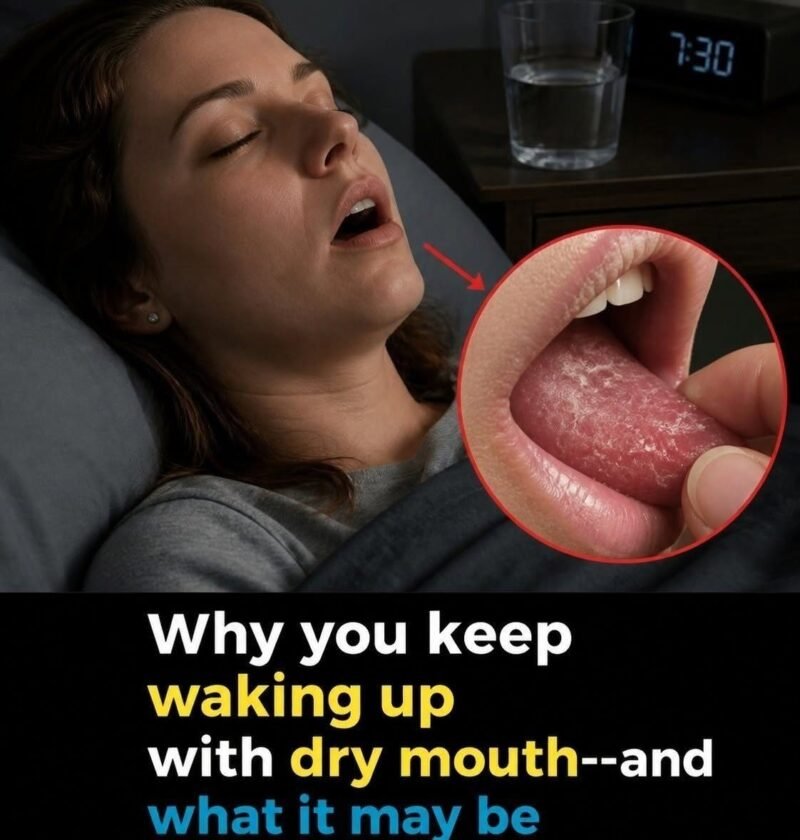
That headline is a classic wellness hook, but unlike the extreme fear-mongering of some clickbait, waking up with a dry mouth is actually a very common physical cue with straightforward biological and environmental explanations.
Medically known as xerostomia, waking up with a parched mouth usually comes down to how you sleep and how much moisture your body retains overnight.
Here is what your body is actually telling you when you wake up with a dry mouth, ranging from simple nighttime habits to underlying factors:
1. You Slept With Your Mouth Open (Mouth Breathing)
This is by far the most common culprit. When you breathe through your mouth all night instead of your nose, moving air constantly evaporates the saliva on your tongue and inner cheeks.
-
Why it happens: Nasal congestion from allergies, a cold, a deviated septum, or even sleep apnea can force you to become an overnight mouth breather.
2. Mild Overnight Dehydration
Your body naturally loses fluids overnight through breathing and minor perspiration. If you didn’t drink enough water throughout the evening, your salivary glands simply won’t have enough fluid to produce a steady stream of saliva while you sleep.
3. Medication Side Effects
Hundreds of common prescription and over-the-counter medications list dry mouth as a primary side effect. These include:
-
Antihistamines and decongestants (often taken right before bed for allergies)
-
Blood pressure medications (like diuretics or calcium channel blockers)
-
Antidepressants and anxiety medications
-
Certain muscle relaxants
4. Environmental Factors
-
Dry Bedroom Air: Running a heater, air conditioner, or living in a dry climate can pull moisture right out of the air and dry out your airways while you sleep.
-
Late-Night Habits: Consuming alcohol, salty foods, or caffeine late in the evening can increase fluid loss and dry out your mouth by morning.
Why Saliva Matters (And Why Chronic Dry Mouth Needs Attention)
Saliva is more than just moisture—it is your mouth’s natural defense system. It washes away food particles, neutralizes plaque acids, and helps prevent tooth decay and gum disease.
While an occasional dry mouth from a stuffy nose or dry room is harmless, chronic dry mouth can increase your risk of cavities and oral infections.
What You Can Do
-
Keep water by the bed: A simple sip overnight can restore moisture instantly.
-
Use a humidifier: Adding moisture to your bedroom air can prevent overnight evaporation.
-
Address nasal congestion: Treating allergies or a stuffy nose can help encourage nose breathing.
-
Review your meds: If a daily medication is causing it, talk to your doctor about timing or alternatives.
Are you frequently waking up with a dry mouth, or have you been dealing with a stuffy nose or allergies lately?