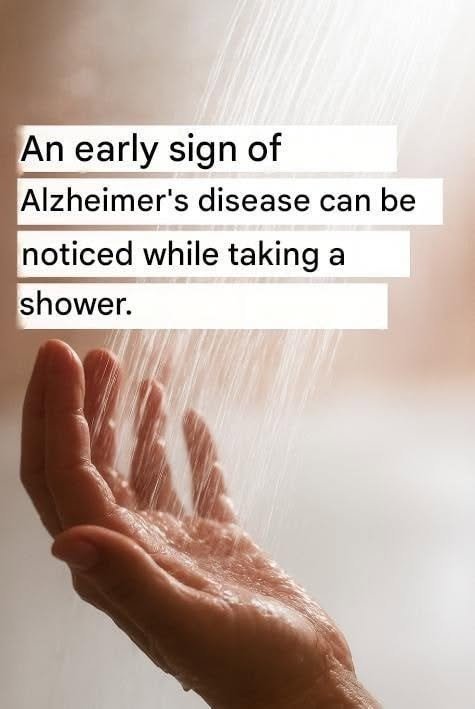
That headline is a prime example of internet health clickbait trying to turn a complex neurological condition into a spooky riddle!
While cognitive decline can eventually affect a person’s ability to safely navigate daily hygiene routines, framing the shower as a secret diagnostic testing ground is a massive exaggeration.
Here is a realistic look at how Alzheimer’s disease actually intersects with personal care, and why the internet’s “shower test” is misleading.
Why the Internet Links Showers to Alzheimer’s
Viral articles usually claim that if an older adult struggles with water temperature, forgets the steps of washing, or feels suddenly confused in the shower, it’s a definitive early sign of dementia.
In reality, changes related to hygiene happen very gradually over time due to executive dysfunction and memory loss, rather than appearing as a sudden, isolated “shower quirk.” As Alzheimer’s progresses through the moderate stages, tasks that require multiple sequential steps—like bathing, dressing, or cooking—can become overwhelming. An individual might:
-
Forget whether they have already washed their hair or use soap.
-
Become confused by the controls for hot and cold water.
-
Feel anxious or disoriented in an enclosed, sensory-heavy environment like a bathroom.
The Real Early Signs of Alzheimer’s
Medical professionals look for much broader patterns of cognitive change when evaluating early Alzheimer’s, as outlined by standard clinical criteria. These include:
-
Memory loss that disrupts daily life: Such as repeatedly forgetting recently learned information, important dates, or asking the same questions over and over.
-
Difficulty planning or solving problems: Trouble following a familiar recipe or keeping track of monthly bills.
-
New problems with words in speaking or writing: Struggling to follow or join a conversation.
-
Misplacing things and losing the ability to retrace steps: Putting items in unusual places (like keys in the refrigerator).
-
Changes in mood and personality: Increased confusion, suspicion, depression, or anxiety.
The Bottom Line
Occasional fatigue, trouble adjusting the shower temperature in an unfamiliar hotel, or simply not feeling like washing your hair on a given day are completely normal human experiences.
When a degenerative condition like Alzheimer’s impacts daily tasks, it is part of a persistent, worsening decline across multiple areas of life—not a single quirky symptom you can spot in the bathroom.
Were you reading an article trying to break down early signs of cognitive decline, or did you spot this specific “shower test” making the rounds on social media?