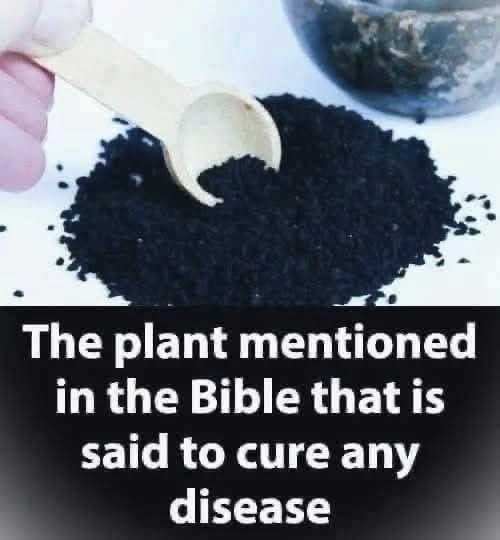
That headline is a masterclass in combining spiritual reverence with viral health clickbait, usually designed to drive traffic to a blog post, video, or supplement shop.
When viral posts claim there is a single plant mentioned in holy texts (such as the Quran or the Bible) that can “cure any disease,” they are almost always referring to black seed (Nigella sativa), commonly known as black cumin or kalonji.
Here is the reality behind the historical significance of these plants versus the internet’s “cure-all” claims:
The Source of the Claim: Black Seed (Nigella sativa)
In Islamic tradition, black seed is traditionally referenced in Hadith literature (such as the statement attributed to Prophet Muhammad that it is a remedy for every disease except death). Similarly, various herbs, resins, and plants—like olives, figs, pomegranates, and balm—appear throughout biblical and historical texts for their nourishment, symbolic value, or traditional uses.
What Science Actually Says About Black Seed
Modern pharmacological research has looked closely at Nigella sativa and its active compound, thymoquinone. Studies show it possesses:
-
Antioxidant properties
-
Anti-inflammatory effects
-
Potential antimicrobial activity
However, there is a massive gulf between a plant having beneficial, bioactive compounds and it being a literal “cure for any disease.”
Why the “Cure-All” Claim is Misleading
-
Metaphor vs. Literal Medicine: In many ancient and traditional contexts, expressions about healing or blessings referred to overall wellness, immune support, and the holistic value of natural provisions, rather than functioning as a clinical panacea for complex pathologies like cancer, genetic disorders, or acute infections.
-
No Single Substance Cures Everything: Human physiology is far too complex for any single plant—no matter how nutrient-dense—to treat every medical condition. Relying on a kitchen spice or supplement to treat a serious illness instead of seeking proper medical diagnosis can be dangerous.
-
Concentration and Quality: The black seed oil or extracts sold online often lack standardized dosing, purity controls, or clinical trials proving efficacy for specific diseases in humans.
The Bottom Line
Traditional plants like black seed, ginger, garlic, and olive oil have valued places in culinary and traditional wellness history. But whenever an internet headline promises a secret “cure-all” found in ancient texts, it’s trading historical respect for modern clickbait hype.
Were you looking into the traditional uses of black seed, or did you stumble across one of these sensationalized videos online?