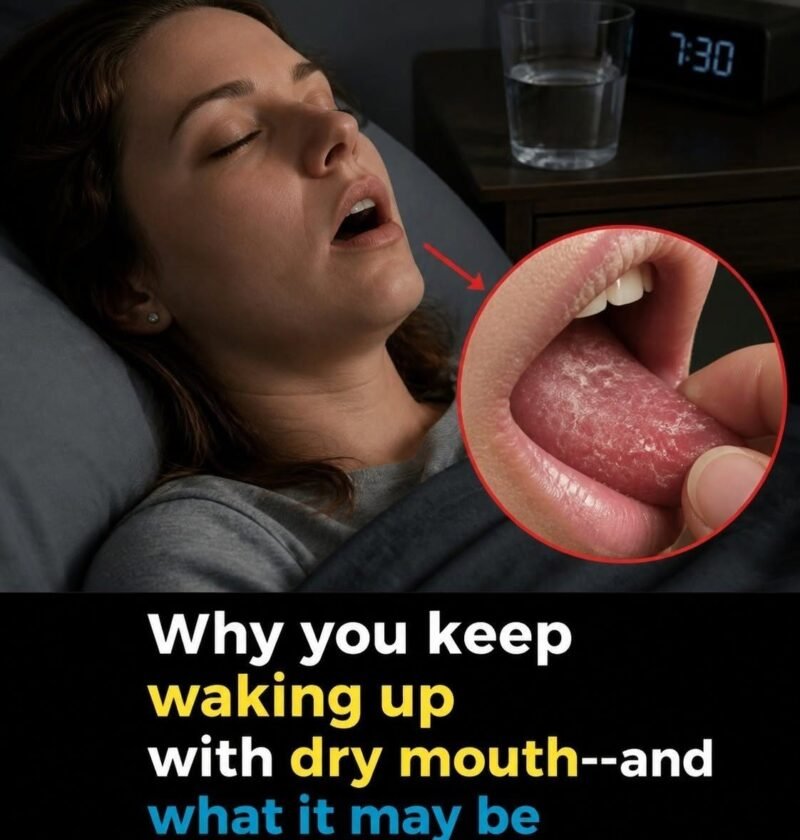
Waking up with a dry mouth is a very common experience. While dramatic headlines might make it sound alarming, the cause is usually straightforward—often related to how you slept or your immediate environment, though it can occasionally point to underlying health or medication factors.
Common reasons you might wake up with a dry mouth include:
-
Mouth Breathing: If you sleep with your mouth open—due to nasal congestion, allergies, a deviated septum, or sleep apnea—airflow continuously dries out the saliva in your mouth overnight.
-
Dehydration: Not drinking enough fluids throughout the day or eating a very salty meal close to bedtime can leave your body mildly dehydrated by morning, reducing saliva production.
-
Medication Side Effects: Hundreds of common medications—including antihistamines, decongestants, high blood pressure drugs, and antidepressants—list dry mouth as a frequent side effect.
-
Environmental Factors: Sleeping in a room with low humidity, particularly if you run a heater or air conditioner, can dry out the air and your airways while you sleep.
-
Caffeine or Alcohol Consumption: Drinking alcohol or caffeinated beverages in the evening can act as diuretics, increasing fluid loss and contributing to morning dryness.
-
Salivary Gland Issues: Less commonly, conditions like Sjögren’s syndrome or other autoimmune disorders can affect the glands responsible for producing saliva.
Simple Ways to Find Relief
-
Keep water nearby: Keep a glass of water by your bed to sip on if you wake up.
-
Use a humidifier: Run a bedside humidifier to add moisture to the air while you sleep.
-
Manage nasal congestion: Try treating nighttime stuffiness with saline rinses or allergy management to encourage nose breathing.
-
Prioritize oral hygiene: Brush and floss regularly, as a dry mouth can increase your risk of cavities and tooth decay.
Are you experiencing persistent dry mouth every morning, or are you noticing any other symptoms like congestion or snoring?