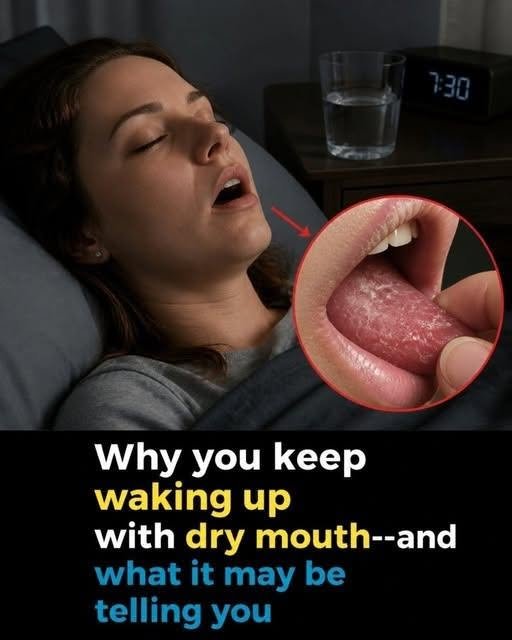
Waking Up With Dry Mouth? Here’s What Your Body Might Be Telling You
Waking with a dry mouth is common and usually isn’t a sign of a serious disease. Often, it happens because saliva production decreases during sleep or because you’re breathing through your mouth.
Common causes
- Mouth breathing: A blocked nose, allergies, a cold, or sleeping with your mouth open can dry out the mouth.
- Dehydration: Not drinking enough fluids during the day—or losing fluids through sweating—can contribute.
- Medications: Hundreds of medicines can cause dry mouth, including some antihistamines, antidepressants, blood-pressure medicines, and decongestants.
- Alcohol and tobacco: Both can contribute to dryness and irritation.
- Sleep apnea: Loud snoring, waking up gasping, morning headaches, and daytime sleepiness along with dry mouth can be clues.
- Diabetes: Persistent thirst and frequent urination together with dry mouth can be symptoms of elevated blood glucose.
- Certain salivary-gland or autoimmune conditions: These are less common but can cause persistent dryness.
What you can try
- Drink enough water throughout the day.
- Address nasal congestion if you have it.
- Avoid excessive alcohol and tobacco.
- Consider a humidifier if your bedroom air is very dry.
- Chew sugar-free gum or use sugar-free lozenges to stimulate saliva.
- Maintain good oral hygiene, because reduced saliva increases the risk of tooth decay and oral infections.
Don’t routinely use sugary drinks or sweets to relieve dryness—they can increase your risk of cavities.
When to get checked
See a healthcare professional or dentist if dry mouth persists for several weeks, is getting worse, makes swallowing difficult, causes frequent mouth sores, or is accompanied by excessive thirst and urination.
If you snore heavily, stop breathing during sleep, wake choking/gasping, or are extremely sleepy during the day, ask about evaluation for sleep apnea.
Bottom line: An occasional dry mouth after sleeping is usually nothing alarming. Persistent dry mouth is worth investigating, particularly if it comes with other symptoms or started after a new medication.