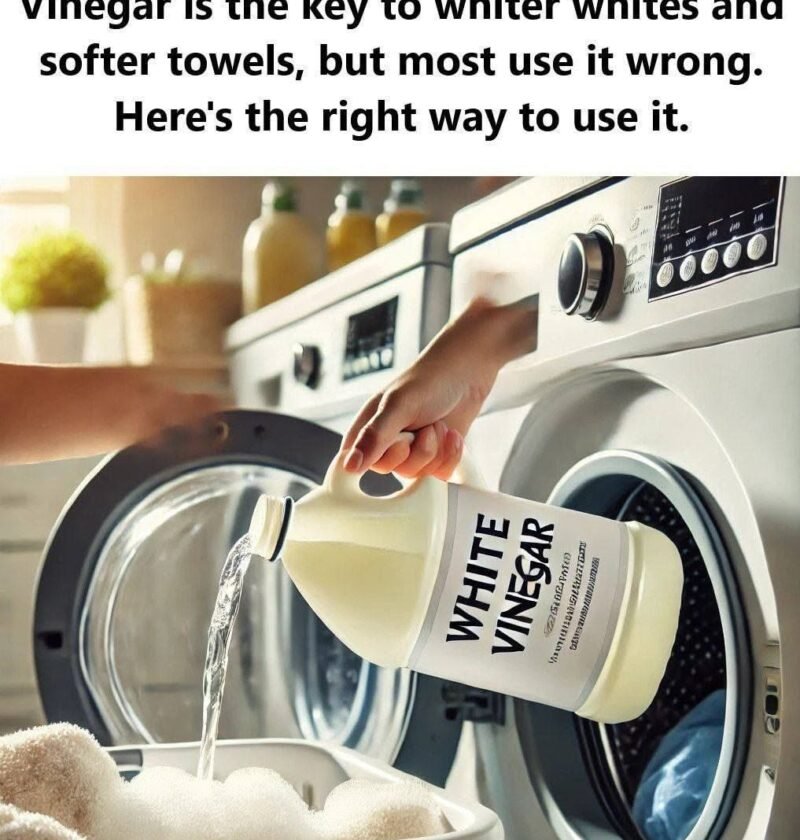
Vinegar for Whiter Whites and Softer Towels: The Right Way 🧺
White vinegar can be useful in laundry, but it’s often overhyped. It can help reduce detergent residue and mineral buildup, which may make towels feel less stiff. It is not a true bleach and won’t reliably turn heavily yellowed whites bright again.
How to use it
For towels and everyday laundry:
-
Add your normal amount of laundry detergent.
-
Put about ½ cup (120 mL) of plain distilled white vinegar in the washing machine’s fabric-softener dispenser, rather than pouring it directly onto clothing.
-
Run the wash using the temperature recommended on the garment-care label.
-
Dry normally.
For a smaller load, you can use less vinegar.
For whites
Vinegar can help remove some odor and mineral/detergent residue, but if whites are seriously stained or yellowed, a laundry product specifically designed for whitening—such as oxygen bleach when appropriate for the fabric—is generally more effective.
🚨 The, but don’t treat it as a miracle whitening agent. For stubborn stains, the right detergent or oxygen important mistake to avoid
Never mix vinegar with chlorine bleach. The combination can produce dangerous chlorine gas.
Also avoid mixing vinegar with other cleaning chemicals unless the product instructions specifically say the combination is safe.
One more towel tip
Skip excessive fabric softener on towels. It can coat the fibers and reduce their absorbency over time. Vinegar may help with residue, but it isn’t necessary for every wash.
Bottom line: Use a modest amount of distilled white vinegar in the fabric-softener compartment when appropriate, but don’t treat it as a miracle whitening agent. For stubborn stains, the right detergent or oxygen-based laundry treatment is usually more effective.