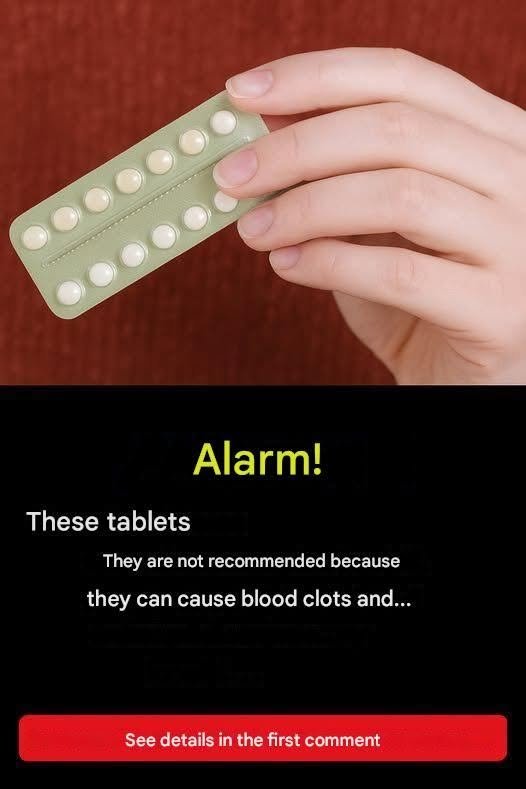
If you’re referring to the viral headline “WARNING! These pills are not recommended because they can cause blood clots and…”, it’s important not to assume that all pills in a particular category cause clots. The specific medication matters.
Some medicines can increase the risk of blood clots in certain people, including:
-
Estrogen-containing birth-control pills — especially combined hormonal contraceptives.
-
Some hormone-replacement therapies containing estrogen.
-
Certain medicines used in cancer treatment or other specialized conditions.
The risk also depends on factors such as age, smoking, obesity, pregnancy/postpartum status, previous blood clots, migraine with aura, and certain inherited clotting disorders.
🚨 Know the warning signs
A possible DVT (deep-vein thrombosis) may cause one-sided leg swelling, pain/tenderness, warmth, or redness.
A possible pulmonary embolism can cause sudden shortness of breath, chest pain that may worsen with breathing, coughing up blood, rapid heartbeat, or fainting. These symptoms require emergency medical attention.
Don’t stop a prescribed medication suddenly just because of a social-media warning. If you give me the name or a photo of the pills, I can explain the actual blood-clot risk, who is most vulnerable, and what precautions apply.