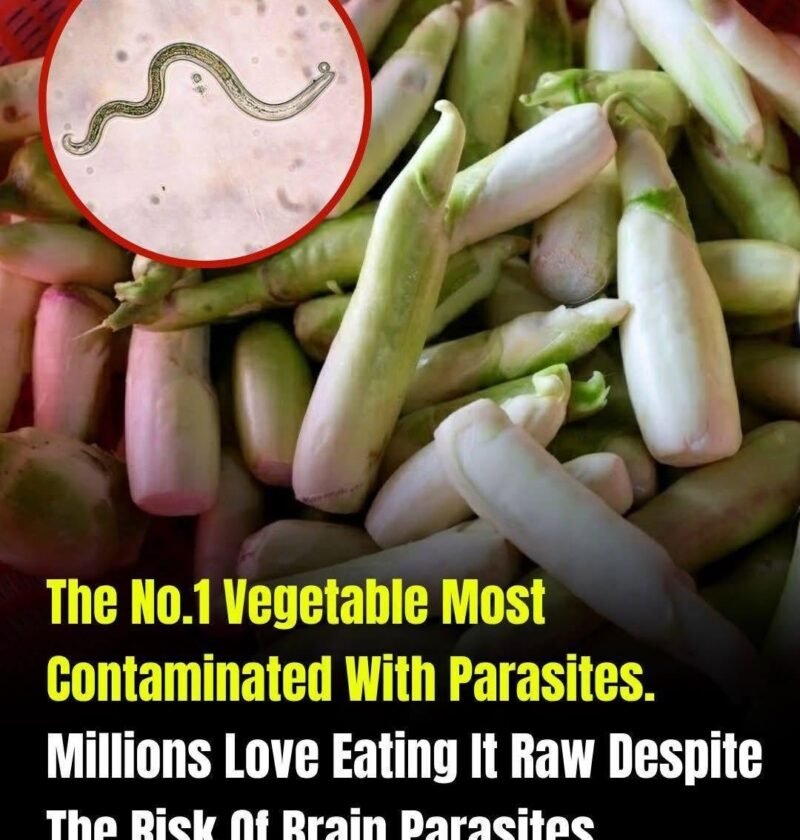
“The Most Parasite-Contaminated Vegetable?” — What’s Actually True
There isn’t a scientifically established single vegetable that is always “the most contaminated with parasites.” Contamination depends on growing conditions, irrigation water, soil, handling, processing, and sanitation.
However, raw leafy greens—such as lettuce and spinach—can be particularly vulnerable because their many folds and surfaces can trap contaminated soil or water, and they’re often eaten without cooking.
🦠 What parasite are people usually talking about?
One important example is Cyclospora, a parasite that can contaminate fresh produce. Recent U.S. food-safety investigations have included outbreaks associated with leafy greens, including lettuce.
But that doesn’t mean lettuce is inherently unsafe or that every head contains parasites.
How to make vegetables safer
- Wash your hands before preparing food.
- Rinse fresh vegetables thoroughly under clean, running water.
- For whole heads of lettuce or cabbage, remove the outer leaves.
- Don’t use soap, bleach, or household disinfectants on produce.
- Keep raw vegetables away from raw meat and poultry to prevent cross-contamination.
- When appropriate, cooking vegetables is the safest option because adequate heat can kill many pathogens.
⚠️ One important detail about Cyclospora
Normal washing may not reliably eliminate Cyclospora. FDA specifically notes that the parasite is resistant to standard chlorine-based sanitizers. For vegetables that can be cooked, heating them to 158°F (70°C) is the safest way to eliminate this parasite.