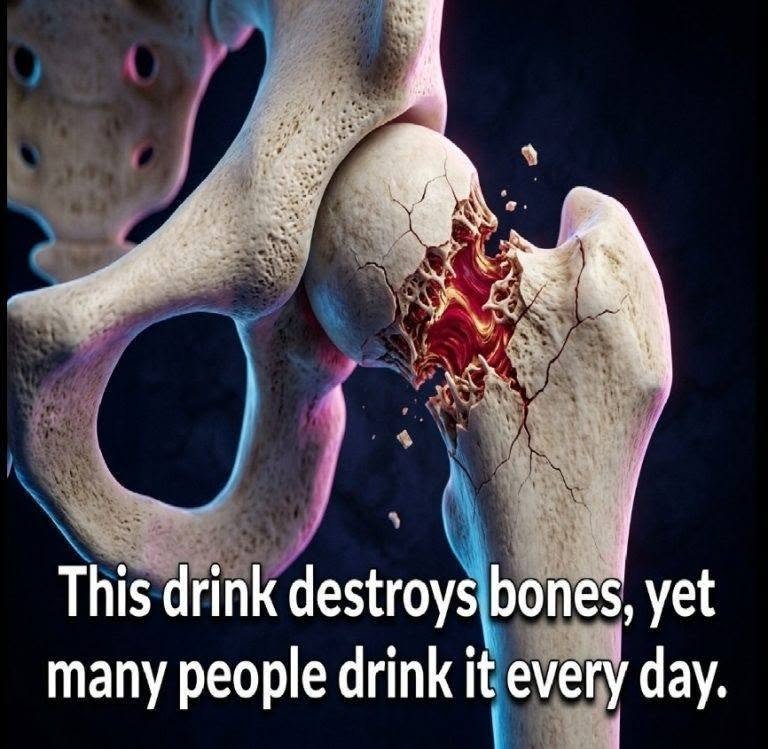
5 Drinks That May Be Harmful to Your Bones
The headline “most harmful” needs some context. No single drink automatically causes osteoporosis, but certain beverages are worth limiting because heavy consumption can contribute to poorer bone health or displace calcium-rich foods from the diet.
1. 🥤 Sugary soft drinks
Frequent consumption of sugar-sweetened and carbonated beverages has been associated with lower bone mineral density in observational research.
The concern isn’t the fizz itself—carbonation doesn’t appear to damage bones. Colas may be more concerning because they can contain caffeine and phosphoric acid, and may replace calcium-rich drinks.
2. 🍺 Heavy alcohol consumption
This is one of the better-established concerns. Excessive alcohol intake can contribute to bone loss and increase fracture risk.
You don’t need to assume that one occasional drink will weaken your bones; the concern is particularly with heavier or chronic consumption.
3. ☕ Excessive coffee
Caffeine can slightly reduce calcium absorption. The Bone Health & Osteoporosis Foundation notes that drinking more than about three cups of coffee daily may interfere with calcium absorption and bone health.
Moderate coffee consumption doesn’t mean you have to give up coffee—just make sure you’re getting adequate calcium.
4. 🧋 Highly caffeinated beverages
Large amounts of caffeine from energy drinks and other highly caffeinated beverages can contribute to excessive caffeine intake. They’re also sometimes loaded with sugar.
The issue is overall caffeine intake and what the beverage replaces in your diet, rather than caffeine being a “bone-destroying” substance.
5. 🍹 Sugary alcoholic cocktails
These combine two things worth limiting: alcohol and substantial added sugar. Regular heavy consumption can contribute to an overall dietary pattern that’s unfavorable for bone health.
🥛 What should you drink instead?
Water is an excellent everyday choice. Depending on your diet, milk or calcium-fortified plant milk can also provide calcium. Calcium and vitamin D are important for maintaining strong bones, along with regular weight-bearing and muscle-strengthening exercise.