Waking up feeling refreshed and pain-free often depends heavily on how you position your body during the night. While comfort is subjective, sleep specialists, physical therapists, and chiropractors generally agree that side sleeping—specifically on your left side—is the gold standard for overall health, digestion, and feeling great the next day.
Here is why experts favor it, how other positions stack up, and how to optimize your sleep posture.
The Winner: Left-Side Sleeping
Sleeping on your side offers the most comprehensive health and recovery benefits for the average person.
-
Why it works wonders:
-
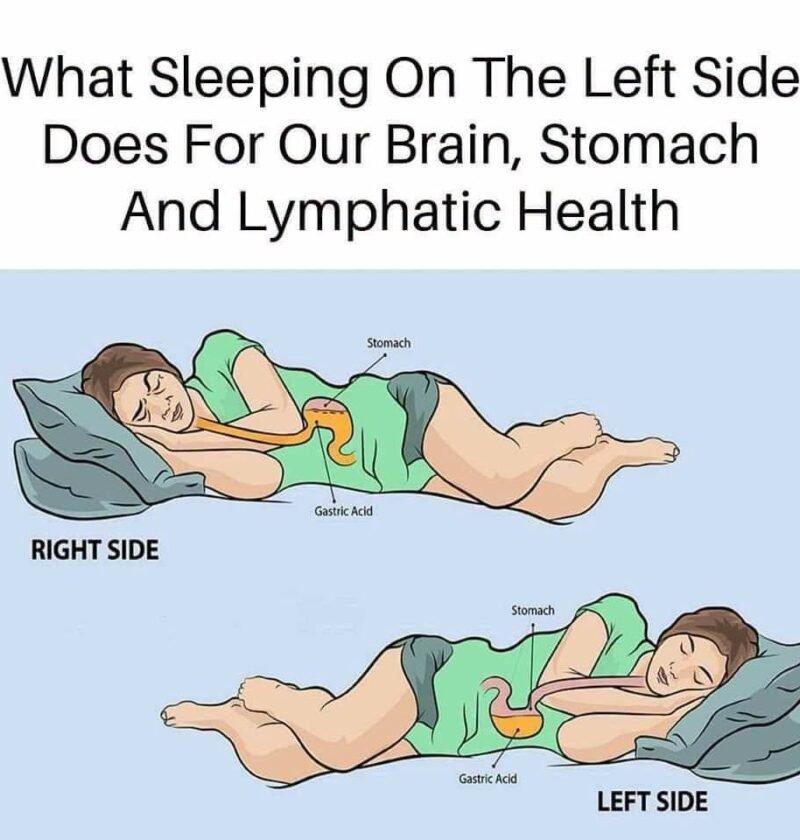
Brain Health: Research suggests that side sleeping helps the brain’s glymphatic system more efficiently clear out metabolic waste and toxins overnight.
-
Optimal Digestion: Because of the anatomical layout of your stomach, sleeping on your left side keeps stomach acid below the esophagus, making it a powerful natural deterrent against acid reflux and heartburn.
-
Circulation: It relieves pressure on the inferior vena cava (the large vein running along the right side of your spine), supporting healthy blood return to the heart.
-
-
Pro-Tip for Side Sleepers: Place a firm pillow between your knees to keep your hips aligned and prevent your top leg from twisting your lower back, and choose a pillow that fills the exact gap between your shoulder and ear to keep your neck straight.
How Other Positions Compare
1. Right-Side Sleeping
-
The Good: Still provides great spinal alignment and is comfortable for heart health compared to sleeping on your back.
-
The Drawback: Can significantly worsen acid reflux and heartburn for people prone to digestion issues, as the stomach sits higher than the esophagus in this position.
2. Back Sleeping (Supine)
-
The Good: Excellent for preventing facial wrinkles and keeping your spine, neck, and shoulders in a neutral, weight-distributed position without twisting joints.
-
The Drawback: It is the absolute worst position for anyone who suffers from snoring, sleep apnea, or acid reflux, as gravity pulls the tongue and soft palate backward to block the airway.
3. Stomach Sleeping (Prone)
-
The Good: Can temporarily reduce snoring.
-
The Drawback: Experts almost universally advise against stomach sleeping. You have to turn your head completely to one side for hours, which strains your cervical spine, twists your neck, flattens the spine’s natural curve, and frequently leads to morning stiffness, neck pain, and lower back aches.
💡 The TakeawayIf you wake up with a stiff neck or a sore back, your sleep position or mattress support is often the culprit. If you want to experiment, try shifting to your side with strategic pillow placement to support your knees and neck.
Do you naturally tend to sleep on your side, back, or stomach, and do you usually wake up feeling rested or stiff?