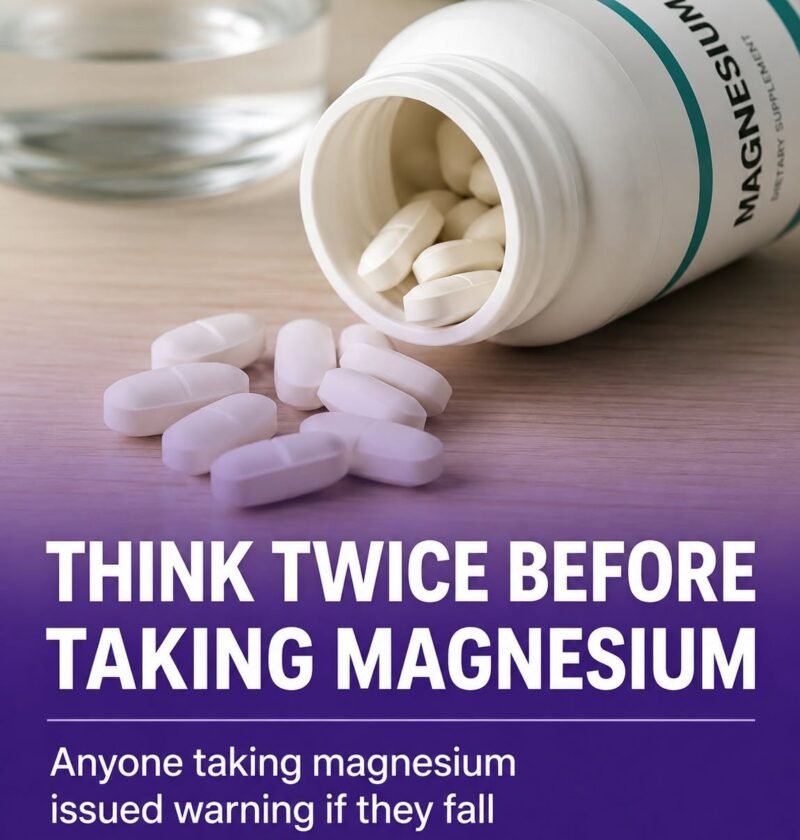
The headline “Taking Magnesium? Health Experts Say These Two Groups Need to Be Extremely Careful” has a legitimate safety point, but “two groups” is an oversimplification.
The two groups that deserve particular caution
1. People with significant kidney impairment
Healthy kidneys normally remove excess magnesium. When kidney function is substantially reduced, magnesium from supplements or magnesium-containing laxatives/antacids can accumulate and potentially cause dangerously high blood magnesium levels. (ODS)
2. People taking certain medications
Magnesium supplements can interfere with absorption of some medicines. Important examples include:
- Certain antibiotics, including doxycycline, ciprofloxacin and levofloxacin.
- Bisphosphonates such as alendronate, used for osteoporosis.
These medications need to be separated from magnesium by specific intervals. (ODS)
Other medicines, including some diuretics and long-term proton-pump inhibitors, can also affect magnesium levels. (ODS)
How much is too much?
For adults, the U.S. NIH sets an upper limit of 350 mg per day of magnesium from supplements and medications unless a healthcare professional recommends otherwise. This limit doesn’t apply to magnesium naturally present in food. Excess supplemental magnesium commonly causes diarrhea, nausea and abdominal cramping; very high amounts can cause serious heart and nervous-system problems. (ODS)
Bottom line: Magnesium isn’t inherently dangerous, and magnesium-rich foods are generally safe. The biggest concern is high-dose supplementation in people with impaired kidney function or when magnesium is taken too close to interacting medications.
If you tell me which magnesium product/dose you’re taking and the medications you take, I can check for specific interactions.