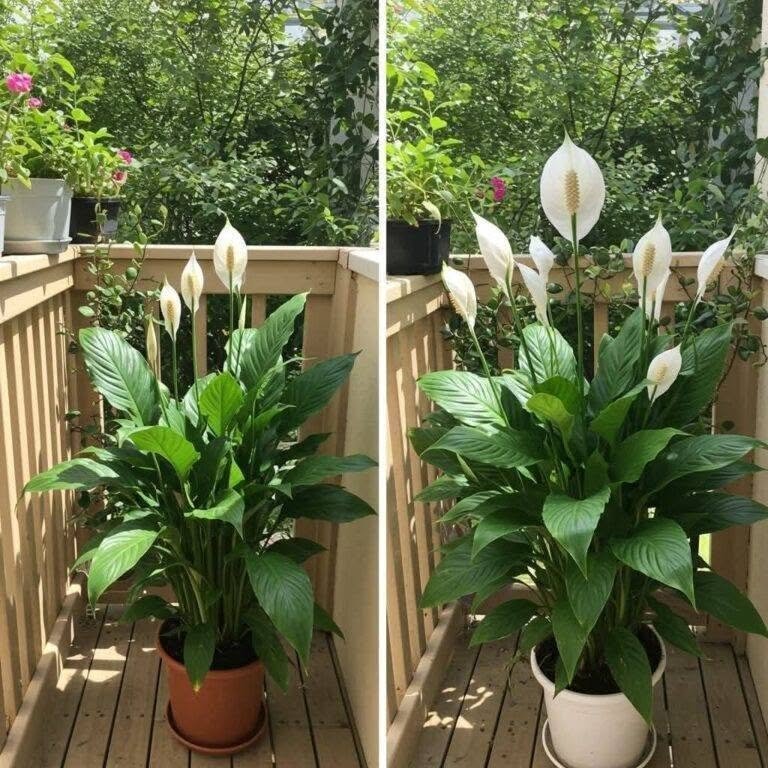
That catchy phrase is a viral gardening trend circulating across social media and YouTube, usually pointing to a popular kitchen-scrap hack: using 1 cup of starchy rice water (or diluted rice flour) as a DIY organic plant tonic.
While it sounds like internet hype, there is a small grain of truth behind why plant owners swear by it, alongside the actual fundamentals needed to revive a stubborn or “ugly” peace lily.
What Is the “1-Cup Rice Water” Trick?
When you rinse or soak uncooked white rice in water, the liquid turns milky white because it captures starches, trace amounts of B-vitamins, and minerals like potassium, magnesium, and phosphorus.
-
The Method: Gardeners take 1 cup of plain, unseasoned rice water (or a very thin blend of water and a spoonful of rice flour) and pour it into the soil.
-
The Benefit: The micronutrients and starches give soil microbes a mild feeding boost, which can act as a light, natural fertilizer to encourage healthy foliage and support blooming.
⚠️ A Word of Caution on the Hack
-
Use sparingly: Do this no more than once a month. Pouring raw starches onto houseplant soil too frequently can attract fungus gnats, cause mold, or sour the soil.
-
Never use seasoned rice water: It must be plain water from washing unseasoned rice—salt, oils, or butter will quickly kill a potted plant.
How to Actually Make an “Ugly” Peace Lily Bloom
No kitchen tonic will force a peace lily to flower if its basic environmental needs aren’t met. If your peace lily is all leaves, drooping, or looking rough (“ugly”), it is usually missing one of these core elements:
-
Shift the Light: The number one reason peace lilies refuse to bloom is lack of light. While they survive in dark corners or low-light offices, they need bright, indirect sunlight (like near an east-facing window) to build the energy required to push out white spathes (flowers).
-
Prune the Dead Weight: Use clean scissors to snip off entirely yellow, brown, or damaged leaves right at the base. This stops the plant from wasting energy trying to heal dying foliage and redirects it toward fresh new growth.
-
Check for Rootbound Stress: If roots are tightly circling out of the drainage holes or the soil dries out within a single day, your plant is severely rootbound. Upgrading it to a pot just 1–2 inches wider with fresh, well-draining potting mix can instantly revive it.
-
Mind Your Water: Peace lilies are dramatic and will flop over completely when thirsty, but they hate sitting in soggy, waterlogged soil. Furthermore, they are sensitive to the heavy chlorine and fluoride found in tap water, which causes brown leaf tips—using filtered water or letting tap water sit out overnight before using can make a massive difference.