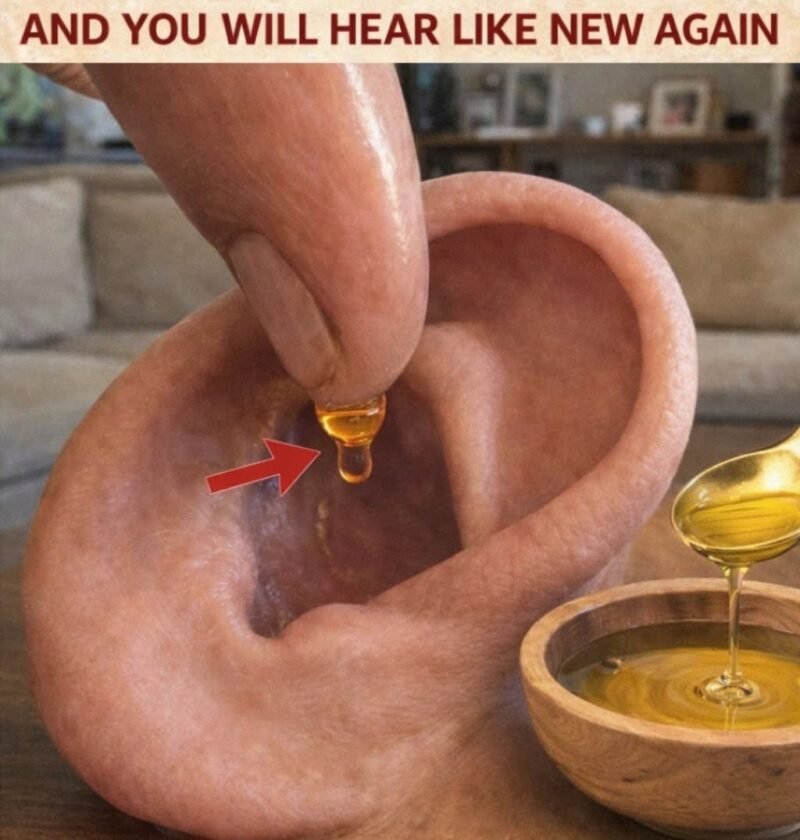
That headline is misleading because no generic “4 drops” can restore hearing “like new.” Hearing loss has many possible causes, and some require prompt medical assessment. Ear drops can help when hearing is reduced by impacted earwax, but they won’t treat age-related or nerve-related hearing loss. (Dorset HealthCare NHS Trust)
👂 “Put 4 Drops in Your Ear and Hear Like New Again”? Be Careful.
You may see claims that a few drops of a household ingredient can restore hearing—but there is no one-size-fits-all ear drop that can reverse hearing loss.
When can ear drops actually help?
If your hearing is muffled because of earwax buildup, appropriate wax-softening drops may help loosen the wax. Once the blockage is cleared, hearing may improve. (Dorset HealthCare NHS Trust)
But hearing loss can also result from:
- Age-related changes
- Long-term noise exposure
- Ear infections
- A damaged or perforated eardrum
- Inner-ear or nerve problems
These conditions need different approaches. (nhs.uk)
⚠️ Don’t put random substances in your ear
Do not use ear drops if you know or suspect you have a perforated eardrum unless a healthcare professional specifically recommends them. (Dorset HealthCare NHS Trust)
Also avoid cotton buds or other objects inside the ear—they can push wax deeper or injure the ear. (Dorset HealthCare NHS Trust)
🚨 Sudden hearing loss needs urgent medical assessment, particularly if it occurs in one or both ears or is accompanied by dizziness, ringing, pain, or discharge. (nhs.uk)
Bottom line: If your ear feels blocked, find out why before putting anything inside it. The right treatment depends on the cause.