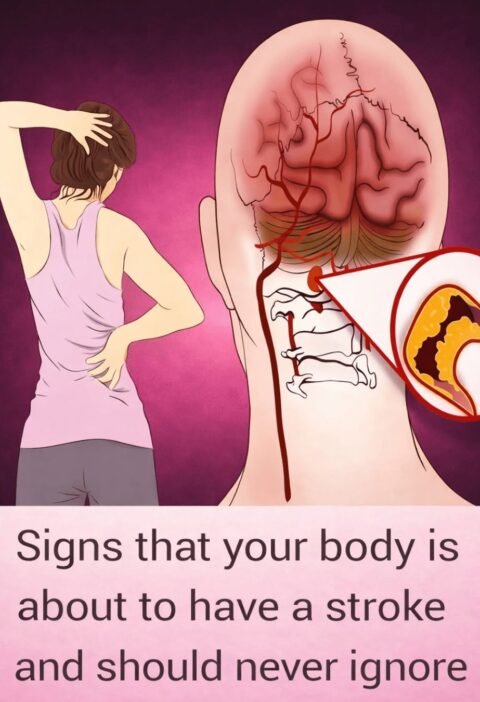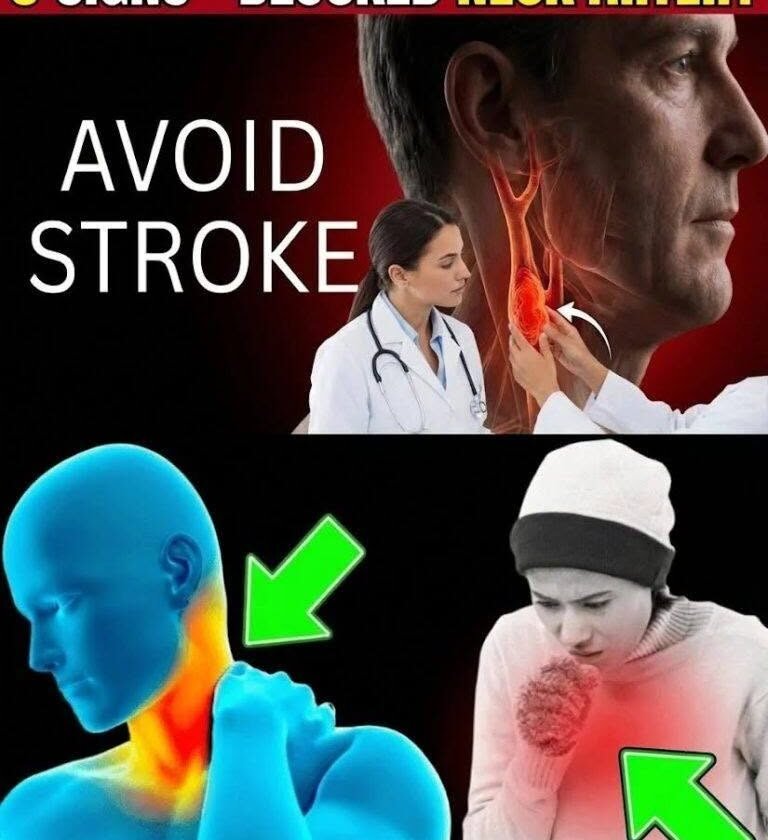
The headline “9 Silent Signs Your Neck Arteries May Be Blocked” is misleading. Carotid artery disease—the buildup of plaque in the arteries supplying the brain—often has no symptoms at all until it causes a TIA or stroke. There aren’t nine reliable “silent signs” that can tell you your carotid arteries are blocked. (Mayo Clinic)
🚨 The symptoms that really matter
A narrowed carotid artery can cause a TIA (transient ischemic attack) or stroke. Symptoms usually begin suddenly and can include:
- Weakness or numbness of the face, arm, or leg, especially on one side
- Trouble speaking or understanding speech
- Sudden loss or disturbance of vision in one or both eyes
- Sudden dizziness, difficulty walking, or loss of balance
- Occasionally, a sudden severe headache without a known cause (Mayo Clinic)
Don’t wait for these symptoms to disappear. Even if they last only a few minutes and resolve, they could represent a TIA and require urgent medical assessment. (Mayo Clinic)
What about a “whooshing” sound in the neck?
A doctor may sometimes hear a bruit (a whooshing sound) over a carotid artery with a stethoscope. However, this isn’t something you can reliably diagnose yourself, and its absence doesn’t rule out carotid disease. (NHLBI, NIH)
How is blockage actually found?
If carotid disease is suspected, clinicians may use carotid ultrasound, and sometimes CT angiography or other imaging, to determine whether an artery is narrowed. (Mayo Clinic)
Risk factors include high blood pressure, smoking, diabetes, high cholesterol, obesity, physical inactivity, increasing age, and a family history of atherosclerosis. Managing these risks is important for preventing stroke. (Mayo Clinic)
Bottom line: There is no reliable “#5” symptom that secretly reveals a blocked neck artery. Sudden neurological symptoms are the important warning signs—and they should be treated as an emergency, even if they go away.