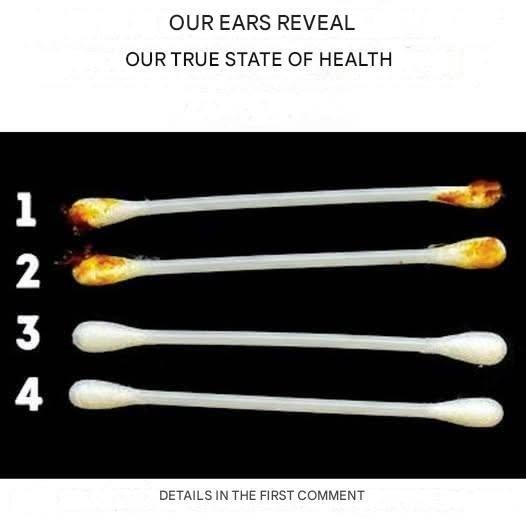
“Our ears reveal the true state of our health” — how true is it?
There is some truth behind the idea, but viral posts often exaggerate it. Your ears can provide clues about certain health problems, but they cannot give a complete picture of your overall health.
👂 What your ears can sometimes tell you
- Hearing loss: New or progressive hearing loss can result from aging, loud-noise exposure, earwax, infections, certain medications, or other medical conditions. It deserves evaluation rather than being dismissed as normal aging.
- Ear pain, discharge or swelling: These can indicate an ear infection or another ear problem. nhs.uk
- Diagonal earlobe crease: You may see claims that a crease running diagonally across the earlobe—often called Frank’s sign—proves you have heart disease. The research does find an association with coronary artery disease, including a 2025 systematic review/meta-analysis. PubMed However, diagnostic research also concludes that the crease isn’t accurate enough to diagnose coronary disease by itself and shouldn’t determine medical management. PubMed Central (PMC)
- Changes in the outer ear: Certain skin conditions, lumps, discoloration, or persistent lesions may warrant examination, but they aren’t automatically signs of an internal-organ disease.
⚠️ What you shouldn’t believe
Claims such as “your ears reveal which organ is failing,” “earwax color diagnoses disease,” or specific parts of the ear corresponding to specific organs are generally not established diagnostic methods.
And if you notice an earlobe crease, don’t panic. It is better viewed as a possible risk clue, not a diagnosis. If you have cardiovascular risk factors such as high blood pressure, diabetes, smoking, high cholesterol, or a strong family history, those are much more meaningful factors to discuss with a clinician.
Bottom line: Your ears can provide useful clues about ear health and possibly cardiovascular risk, but they are not a medical “map” of your entire body. A symptom, physical sign, or ear appearance should be interpreted alongside your history and appropriate medical testing.
Sources