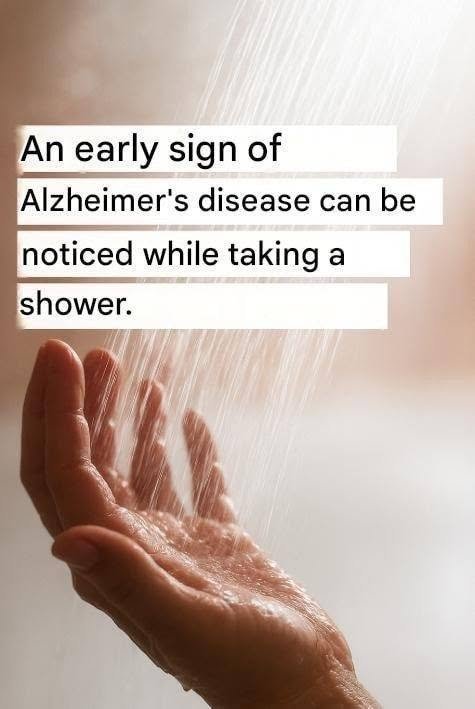
A Subtle Early Sign of Alzheimer’s You Might Notice in the Smell…
If the missing word in that headline is “smell,” there is some real science behind the claim—but it should not be interpreted as a diagnosis.
A gradual decline in the ability to identify familiar smells has been associated with mild cognitive impairment and Alzheimer’s-related changes in the brain. Research from the National Institute on Aging found that poorer odor-identification performance was associated with a higher likelihood of developing mild cognitive impairment.
N
National Institute on Aging
+1
What might you notice?
Familiar foods or household smells seem harder to recognize.
You can smell something, but can’t identify what it is.
Foods seem to have less flavor because smell contributes strongly to taste.
Your sense of smell gradually becomes weaker without an obvious explanation.
However, smell loss has many other causes, including respiratory infections, sinus problems, aging, smoking, certain medications, dental problems, and nasal conditions.
N
NIDCD
Other early Alzheimer’s changes
More established warning signs include repeatedly forgetting recent information, difficulty managing familiar tasks or finances, getting lost in familiar places, problems finding words, and changes in judgment or reasoning.
N
National Institute on Aging
+1
Don’t panic over one symptom. A new or progressive loss of smell is worth discussing with a healthcare professional, particularly when accompanied by noticeable changes in memory or thinking. A smell test cannot by itself diagnose Alzheimer’s.
N
newsinhealth.nih.gov
N
N
N
Sources