🍉 No More Bland Watermelons: How to Pick a Sweeter One
You can’t know a watermelon’s exact sweetness just by looking at it, but a few visual and physical clues can improve your chances.
Look for a large creamy-yellow field spot. This is the area where the melon rested on the ground. A mature melon often develops a yellow or orange-yellow spot rather than a pale white one.
Choose strong, contrasting webbing or sugar spots. Brown, rough-looking webbing can indicate where pollination occurred, although it isn’t a guaranteed sweetness test.
Look for a duller rind. A very shiny green exterior isn’t necessarily a sign of ripeness; a mature watermelon often has a somewhat less glossy appearance.
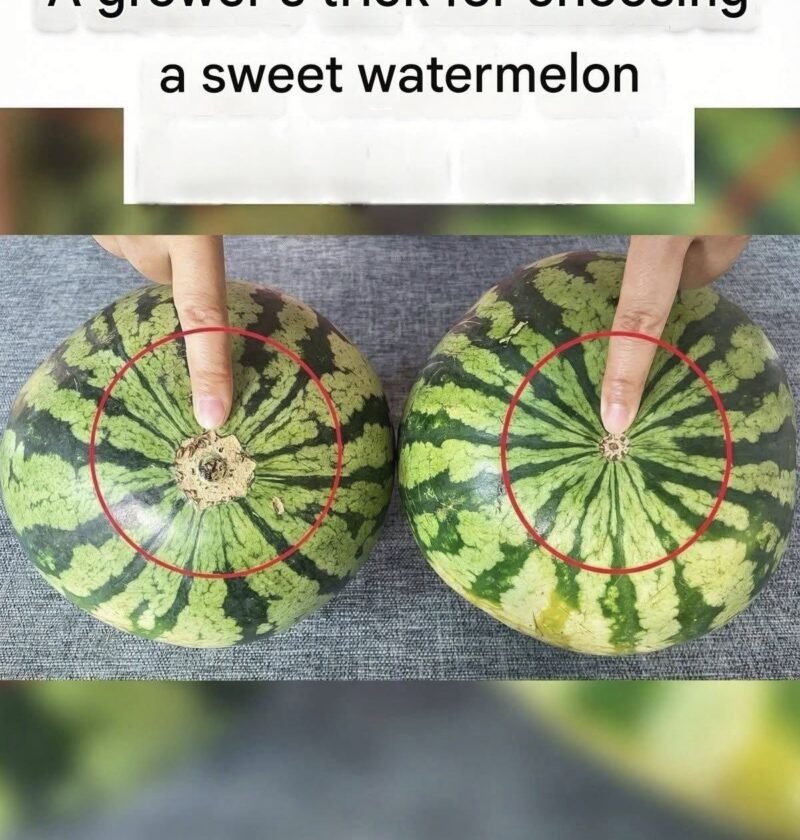
Check the stem if it’s still attached. A dry, brownish stem can indicate maturity, whereas a very green stem may suggest the melon was harvested earlier.
Pick one that feels heavy for its size. This usually indicates good water content and is a useful freshness clue.
Don’t rely on tapping alone. The traditional “hollow sound” test is subjective and isn’t a dependable way to measure sweetness.
🍉 The best quick checklist
Yellow field spot + heavy for its size + mature-looking rind + dry stem = a promising watermelon.
But none of these signs guarantees a sweet melon. Variety, growing conditions, harvest timing, and storage all influence flavor.