When sensational headlines proclaim that “colonoscopies will no longer be an invasive examination,” it usually signals an exciting breakthrough in non-invasive screening alternatives rather than a painless, needle-less version of the traditional procedure itself.
While a traditional colonoscopy remains the gold standard because gastroenterologists can simultaneously view and remove precancerous polyps (biopsy), medical technology has introduced advanced non-invasive options that are changing colorectal cancer screening.
Here is what these new methods actually entail, how they work, and what you need to know:
1. Advanced Stool-Based DNA Tests (e.g., Cologuard)
-
How It Works: Instead of a camera inserted into the colon, you collect a simple stool sample at home using a kit mailed to your door. The sample is analyzed in a laboratory for altered DNA biomarkers shed from precancerous growths or tumors, as well as hidden (occult) blood.
-
The Benefit: Completely non-invasive, requires no dietary prep, laxatives, or sedation, and can be done entirely in the privacy of your home.
-
The Catch: It is a screening tool, not a diagnostic or preventative one. If a stool DNA test comes back positive, you must still follow up with a traditional, invasive colonoscopy so doctors can locate and remove any polyps or cancerous tissue.
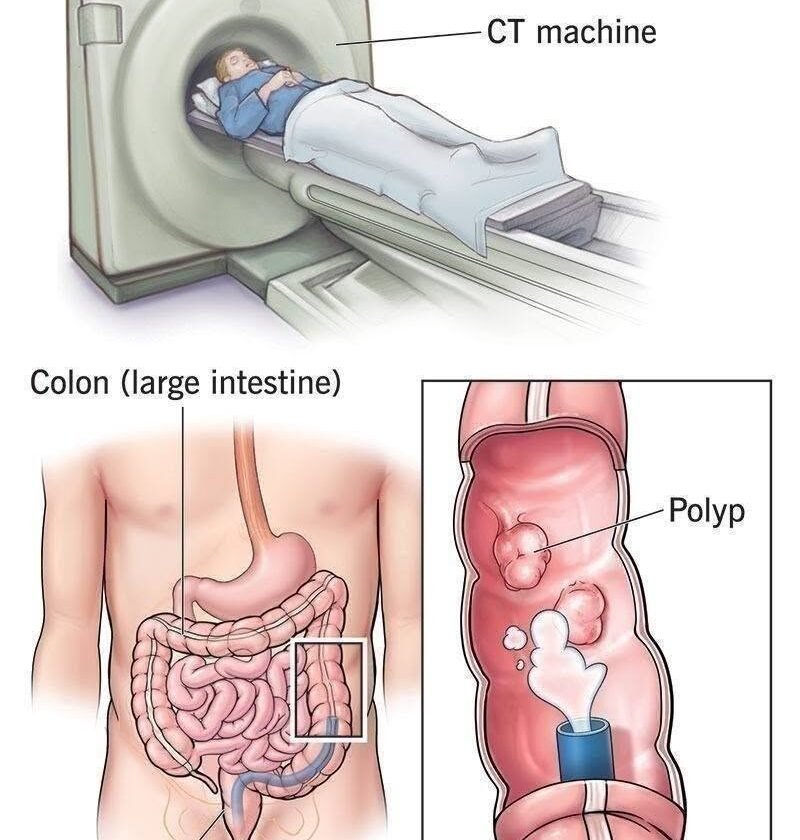
2. Virtual Colonoscopy (CT Colonography)
-
How It Works: A radiologist uses specialized low-dose CT scanning to generate highly detailed 3D images of your large intestine.
-
The Benefit: It avoids a camera scope and sedation, though your bowel still must be thoroughly cleaned out with laxatives beforehand, and a small tube is briefly inserted into the rectum to inflate the colon with air for clear imaging.
-
The Catch: Like stool tests, if the scan detects a suspicious polyp or growth, you cannot have it removed on the spot; you must undergo a follow-up traditional colonoscopy for the actual removal and biopsy.
Why Traditional Colonoscopy Is Still the “Gold Standard”
Gastroenterologists emphasize that while non-invasive tests are fantastic for low-risk, average-population screenings, they cannot replace the diagnostic power of a standard colonoscopy. A traditional colonoscopy is both a detective tool and a treatment tool rolled into one—allowing doctors to spot a tiny, flat polyp and snip it out before it ever has a chance to turn malignant.