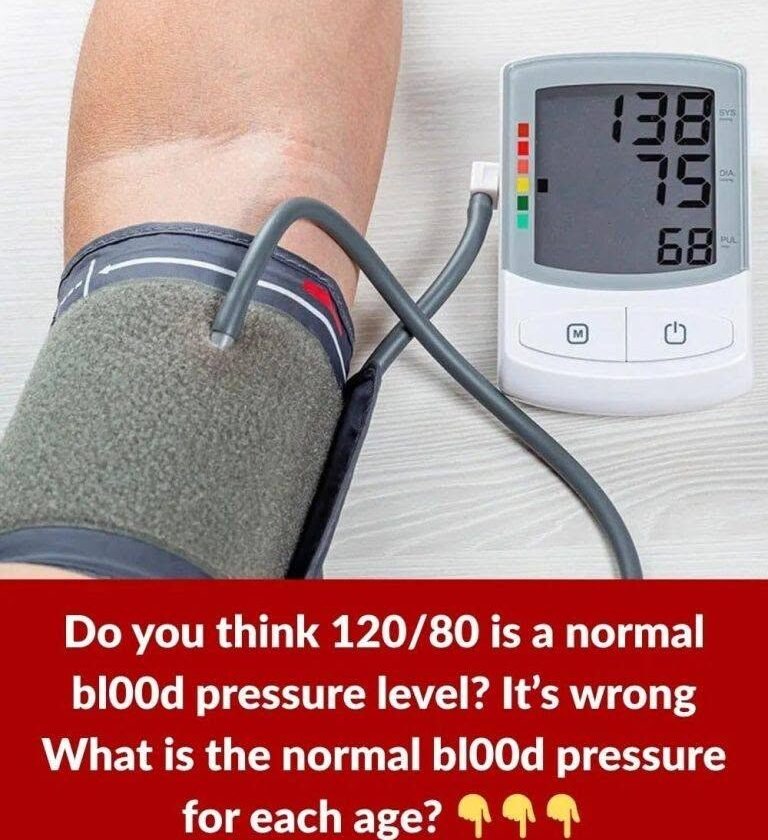
What is the normal blood pressure for each age?
A common internet claim is that older people are supposed to have higher “normal” blood pressure because of their age. That’s not quite right.
For adults, the current 2025 AHA/ACC guideline uses the same basic blood-pressure categories across adulthood rather than giving a separate “normal” number for each decade. (professional.heart.org)
| Blood pressure | Category |
|---|---|
| Below 120/80 mmHg | ✅ Normal |
| 120–129 / <80 | Elevated |
| 130–139 or 80–89 | Stage 1 hypertension |
| ≥140 or ≥90 | Stage 2 hypertension |
The general treatment goal for adults is below 130/80 mmHg, although an individual’s target may need to be adjusted because of pregnancy, frailty, other illnesses, or other clinical circumstances. (professional.heart.org)
👴 Does 70 or 80 mean 140/90 is normal?
No. It’s common for blood pressure to rise with age, but that doesn’t make hypertension “normal.” A reading such as 150/90 in an 80-year-old shouldn’t automatically be dismissed as normal for their age. It should be interpreted in the context of repeated measurements and the person’s overall health.
👶 Children are different
For children, there isn’t one adult-style cutoff for every age. Blood pressure is interpreted according to age, sex, and height, particularly in younger children. (NHLBI, NIH)
⚠️ When is it dangerously high?
A reading over 180/120 mmHg is severely high. If it occurs with chest pain, shortness of breath, weakness/numbness, vision changes, or difficulty speaking, seek emergency medical care immediately. (American Heart Association)
Bottom line: For adults, don’t use an age-based chart that says higher pressure is automatically healthy. Under 120/80 is the normal category, and consistently elevated readings deserve proper evaluation. (professional.heart.org)