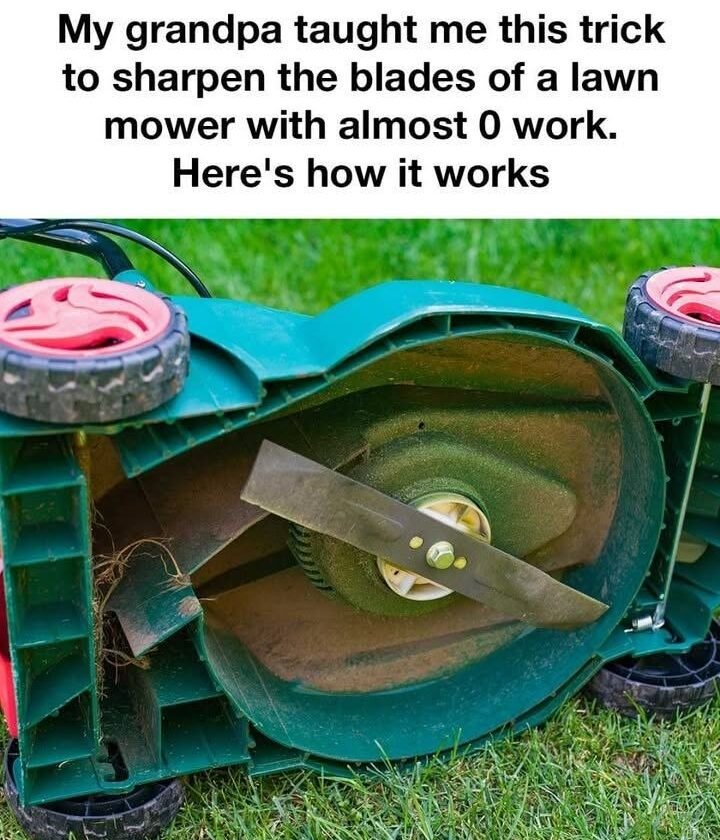
The Simple Lawn Mower Blade Trick My Grandpa Taught Me
Lawn mower maintenance is an essential skill for anyone who wants a healthy, well-kept lawn. While many homeowners remember to check the fuel, oil, and air filter, one important part is often overlooked: the mower blade.
A dull blade doesn’t cut grass cleanly. Instead, it can tear and shred the grass tips, leaving the lawn looking uneven and brown. Keeping the blade properly sharpened can help your mower cut more efficiently and leave behind a cleaner-looking lawn.
My grandpa always believed that lawn care didn’t have to be complicated. He taught me that regular blade inspection and sharpening could make a noticeable difference—and you don’t necessarily need expensive equipment to do it.
🌱 Why Sharp Mower Blades Matter
A sharp blade produces a cleaner cut than a dull one. When grass is torn rather than cleanly cut, the damaged tips can give the lawn a ragged, brown appearance.
A properly maintained blade can also help the mower work more efficiently.
However, sharpening isn’t about making the blade razor-sharp. The goal is to restore the manufacturer’s intended cutting edge while keeping the blade properly balanced.
🧰 What You’ll Need
You don’t need a workshop full of specialized equipment.
Depending on your mower, gather:
- A socket wrench that fits the blade bolt
- A sturdy pair of work gloves
- A wooden block for stabilization
- A metal file or mower-blade sharpening tool
- A wire brush or cloth for cleaning
- A blade balancer, if available
A small amount of lubricant can help loosen grime or a stubborn bolt, but WD-40 or another lubricant does not actually sharpen the blade. Sandpaper is also generally not the best tool for restoring a mower blade’s cutting edge.
🔧 Step-by-Step: Sharpening the Blade
1. Disconnect the mower from its power source
This is the most important step.
For a gas-powered mower, disconnect the spark-plug wire. For a battery-powered mower, remove the battery according to the manufacturer’s instructions.
Never work underneath a mower while it could accidentally start.
2. Secure the mower
If the mower needs to be tilted, follow the manufacturer’s instructions and make sure it is completely stable.
Use a wooden block or another appropriate support to prevent movement—but keep your hands away from the blade.
3. Remove the blade
Wear sturdy gloves and use the correct socket wrench to loosen the blade bolt.
Before removing the blade, take a quick photograph of its orientation. This can help you reinstall it correctly.
4. Inspect it carefully
Clean away accumulated grass and dirt, then look for cracks, deep damage, severe corrosion, or bends.
Never try to repair and sharpen a cracked or severely damaged blade. Replace it instead.