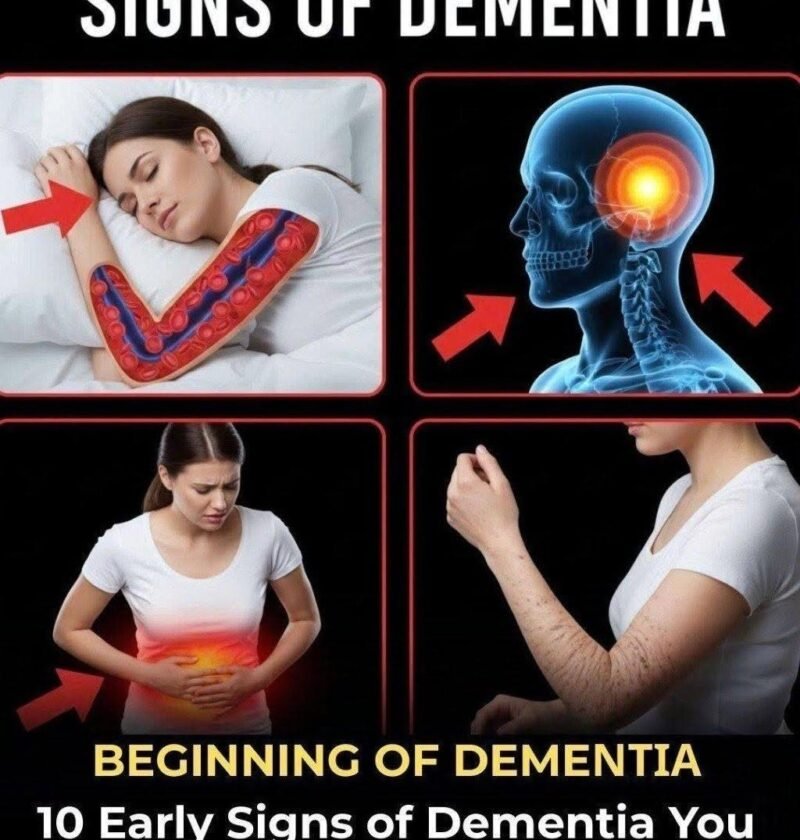
Recognizing the early signs of dementia goes far beyond occasional forgetfulness—such as misplacing keys or forgetting why you walked into a room. Dementia is an umbrella term for a decline in mental ability severe enough to interfere with daily life, and catching the earliest shifts can make a profound difference in medical management and planning.
According to neurological and geriatric experts, here are 10 early signs of dementia you should never ignore:
1. Disruptive Memory Loss (Especially Recent Events)
-
What it looks like: Forgetting recently learned information, important dates, or events, and asking for the same information over and over again. Unlike normal aging (where you might forget a name or appointment temporarily but remember it later), someone with early dementia relies increasingly on memory aids or family members for things they used to handle on their own.
2. Difficulty Planning or Solving Problems
-
What it looks like: Noticeable changes in the ability to develop and follow a plan or work with numbers. An individual might struggle to follow a familiar recipe, keep track of monthly bills, or concentrate on tasks that require sequential steps, taking much longer than they used to.
3. Trouble Completing Familiar Tasks at Home or Work
-
What it looks like: Finding it hard to complete everyday tasks that should be second nature. This could include trouble driving to a familiar location, managing a budget at work, or remembering the rules of a favorite game.
4. Confusion with Time or Place
-
What it looks like: Losing track of dates, seasons, and the passage of time. Individuals may lose track of where they are or how they got there, or forget what year or month it is.
5. Trouble Understanding Visual Images and Spatial Relationships
-
What it looks like: For some people, having vision problems is a sign of dementia. This can manifest as difficulty reading, judging distance, or determining color or contrast, which can lead to issues with balance, driving, or tripping over everyday objects.
6. New Problems with Words in Speaking or Writing
-
What it looks like: Struggling to follow or join a conversation. A person might stop mid-conversation with no idea how to continue, or they may repeat themselves. They might also struggle with vocabulary, calling things by the wrong name (e.g., calling a watch a “hand-clock”).
7. Misplacing Things and Losing the Ability to Retrace Steps
-
What it looks like: Putting things in unusual places—such as keeping an iron in the freezer or a wristwatch in the sugar bowl. They may accuse others of stealing because they cannot remember where they placed an item and cannot retrace their steps to find it.
8. Decreased or Poor Judgment
-
What it looks like: Experiencing changes in decision-making or judgment. For example, a person might show poor judgment when dealing with money, giving large sums away to telemarketers, or paying less attention to personal grooming and hygiene.
9. Withdrawal from Work or Social Activities
-
What it looks like: Pulling away from hobbies, social activities, work projects, or sports. The individual may avoid social situations because they feel overwhelmed by changes they are experiencing or because they find it hard to keep up with conversations.
10. Changes in Mood and Personality
-
What it looks like: Becoming unusually confused, suspicious, depressed, fearful, or anxious. They can easily become upset at home, with friends, or when pushed out of their comfort zones.
Understanding the Difference: Normal Aging vs. Dementia
It is entirely normal to occasionally forget a name or make a bad decision. However, when these behaviors begin to disrupt daily independence, professional life, or social relationships, it warrants a professional medical evaluation.
When to See a Doctor: If you or a loved one are consistently displaying several of these signs, schedule an appointment with a primary care physician or a neurologist. Many conditions that mimic dementia—such as vitamin deficiencies, thyroid disorders, medication side effects, or depression—are completely treatable or reversible, and early diagnosis opens the door to the best possible care and support.