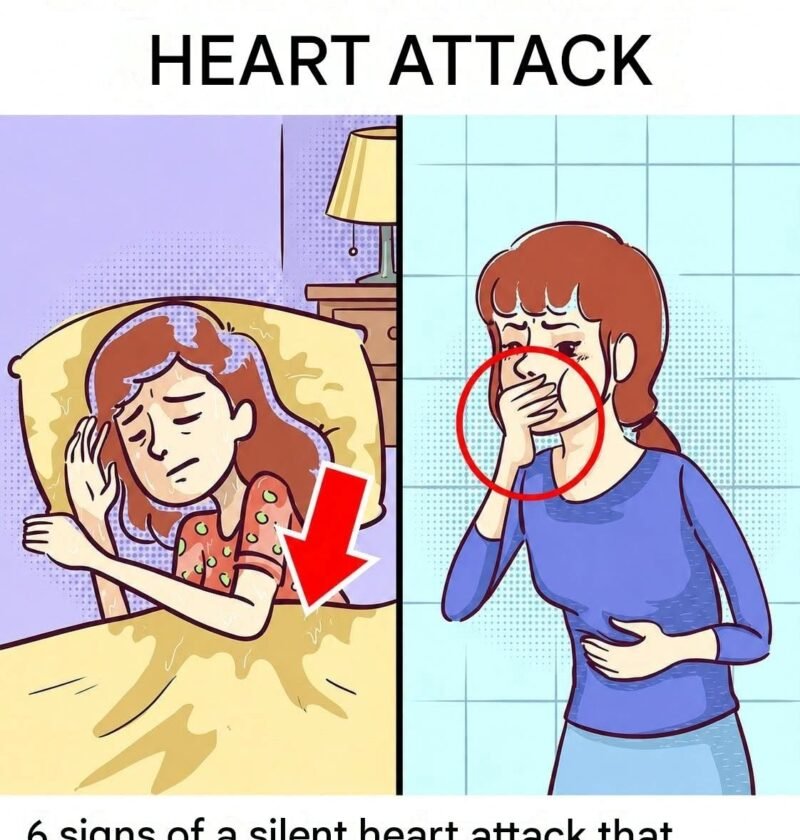
A silent heart attack (medically known as a silent myocardial infarction) occurs when blood flow to a portion of the heart is blocked, but the symptoms are either so mild, unusual, or completely absent that the person doesn’t realize they are having a medical emergency.
Because television has conditioned us to expect dramatic chest-clutching pain, subtle warning signs are frequently misattributed to everyday stress, aging, or minor illnesses. These signs are particularly common among women, older adults, and individuals with diabetes.
Here are 6 frequently overlooked signs of a silent heart attack:
1. Unexplained, Crushing Fatigue
Rather than feeling tired after a long day, this is a profound, heavy exhaustion that comes on suddenly and interferes with basic daily tasks. Many survivors look back and remember feeling so weak or drained that they could barely lift groceries or walk across a room, often mistakenly blaming it on lack of sleep or burnout.
2. Vague Upper Body Discomfort (Jaw, Neck, or Upper Back)
Cardiac pain doesn’t always stay in the chest. The heart shares nerve pathways with other upper-body areas. Instead of chest pressure, a silent heart attack can present as a dull ache, tightness, or pressure in the jaw, teeth, neck, throat, or between the shoulder blades. People often mistake this for a dental issue, a pulled muscle, or poor posture.
3. Shortness of Breath During Routine Activities
If you find yourself suddenly gasping for air or feeling winded by simple activities you usually handle with ease—such as making the bed, walking up a flight of stairs, or grocery shopping—it can indicate that the heart is struggling to pump oxygen efficiently. This breathlessness often happens without any accompanying chest discomfort.
4. Subtle Chest Sensations (Pressure, Fullness, or Burning)
A silent heart attack rarely causes the sharp, crushing pain seen in movies. When chest symptoms are present, they are often described as a mild pressure, a feeling of fullness, a heavy object resting on the chest, or a strange squeezing sensation that may come and go over a few minutes.
5. Persistent Indigestion, Nausea, or Heartburn
Because the lower part of the heart sits close to the digestive tract, cardiac distress can mimic gastrointestinal issues. Unexplained nausea, a sudden sour stomach, breaking out in a cold sweat while eating, or a persistent burning sensation that feels like severe acid reflux can actually be masking a cardiac event.
6. A Sudden Sense of Impending Doom or Unexplained Anxiety
One of the most psychologically striking symptoms reported by survivors is a sudden, irrational wave of intense anxiety, dread, or a gut feeling that “something is terribly wrong,” even when they are sitting safely at home. The brain reacts instinctively to sudden drops in cardiac output and oxygen, triggering a visceral fight-or-flight response.
When to seek help: If you or someone nearby experiences sudden, unusual combinations of these symptoms—especially if they don’t resolve with rest or are accompanied by lightheadedness, cold sweats, or nausea—do not wait to see if they pass. Seek emergency medical evaluation immediately (call 911 or your local emergency number) to run an ECG and check cardiac enzymes.