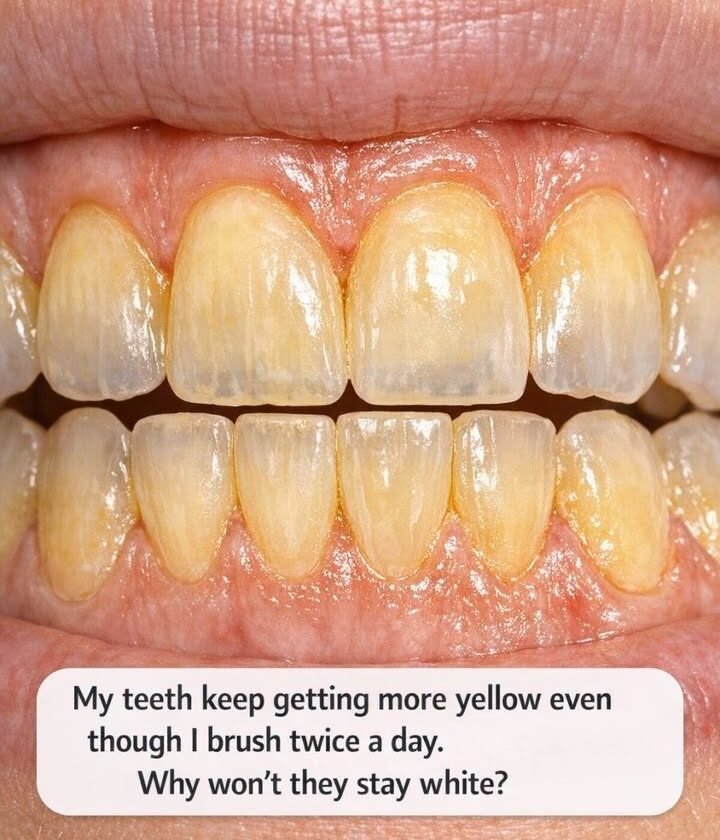
Why Yellowing Happens Despite Twice-Daily Brushing
1. Enamel Thins While Dentin Shows Through
2. Pigments Stick Faster Than Routine Brushing Removes Them
-
Drinks & foods: Tea, coffee, cola, berries, tomato sauces, curries, and deeply colored spices.
-
Tobacco & chewing habits: Smoking, vaping, or chewing tobacco/betel/paan leaves deep, stubborn brown-yellow stains quickly.
-
Chlorhexidine mouthwash: Prescription antimicrobial rinses can cause noticeable extrinsic staining if used regularly.
3. Acid Erosion & Over-Brushing Make Stains Grab Hold
-
Acidic foods and drinks (citrus, sodas, vinegar, sour candies) temporarily soften enamel, making it rougher and more prone to picking up stain molecules.
-
Brushing right after acidic meals or scrubbing too hard / using gritty charcoal or whitening pastes can wear away enamel and rough up the surface, actually making teeth look more yellow over time.
4. Internal (“Intrinsic”) Causes
-
Aging naturally darkens dentin and thins enamel.
-
Tooth trauma or past dental work (a knocked tooth, deep decay, or older fillings/crowns that don’t bleach like natural teeth).
-
Certain medications (such as tetracycline antibiotics taken during tooth development, or certain medical conditions).
Practical Steps That Actually Help
-
Check your brushing technique, not just frequency: Use a soft-bristled toothbrush and gentle circular strokes for two minutes. Avoid brushing immediately after acidic food or drinks—rinse with plain water first and wait about 30 minutes.
-
Rinse or sip water with staining foods and drinks: Swishing water after tea, coffee, or colored meals cuts down how much pigment lingers on enamel.
-
Be cautious with harsh abrasive pastes: Very gritty whitening toothpastes or charcoal powders can scrub away enamel and cause sensitivity without fixing yellow dentin.
-
Talk to a dentist about safe whitening or exams: Surface stains often respond well to professional cleanings or dentist-supervised whitening, while thin enamel or internal discoloration may call for tailored options—and a checkup rules out decay or enamel wear.
When to see a dentist promptly: If yellowing comes with tooth sensitivity to hot, cold, or sweets, visible notches or chips near the gumline, pain when biting, or a single tooth turning noticeably darker than its neighbors.