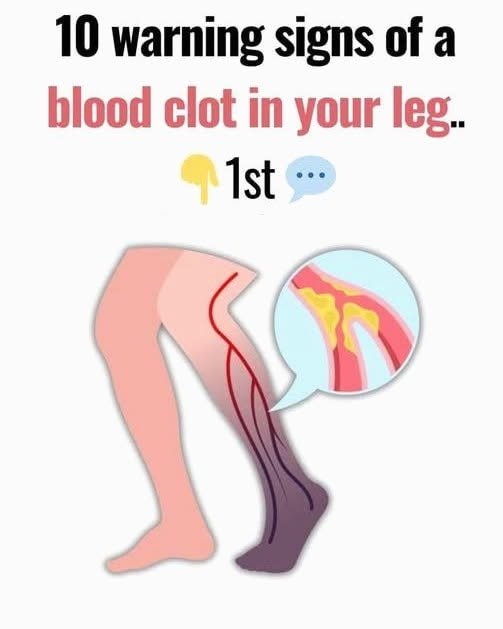
Unlike a simple muscle cramp or a bit of post-workout soreness, a blood clot in a deep vein—known medically as Deep Vein Thrombosis (DVT)—is a serious medical condition that requires prompt attention.
Internet lists love to sensationalize these warnings, but understanding what a DVT actually looks and feels like can be vital. Crucially, a blood clot almost always affects only one leg, rather than both limbs equally.
Here are the key warning signs of a blood clot in the leg:
1. Unilateral Leg Swelling (The Most Common Sign)
-
What it looks like: Swelling that develops in just one leg (or one calf), rather than both. Your ankle or foot on that side might also puff up suddenly.
-
Why it happens: The blood clot blocks normal blood flow through the deep veins, causing fluid to back up into the surrounding tissues.
2. Deep Pain, Aching, or Throbbing
-
What it feels like: A persistent ache, soreness, or throbbing pain deep within the calf or thigh.
-
The distinction: People often mistake it for a severe “charley horse” or a gym injury, but unlike a standard muscle cramp that passes, this pain lingers, stays deep in the muscle, and often worsens when you walk or flex your foot upward.
3. Localized Warmth
-
What it feels like: The skin over the painful or swollen area feels noticeably warmer to the touch than the surrounding skin on that leg or your other leg.
-
Why it happens: The blockage and subsequent inflammation concentrate blood flow and heat in that specific zone.
4. Skin Discoloration (Redness or Blueness)
-
What it looks like: The skin over the clot may turn visibly red, pale, or take on a bluish or purplish tint. (Note: Skin color changes can sometimes be harder to spot depending on your skin tone, but the contrast with the healthy leg is often a key clue.)
5. Tenderness When Pressed
-
What it feels like: If you gently press on your calf muscle or the back of your knee and experience sharp, disproportionate tenderness, it’s a classic clinical indicator.
6. A Heavy, Fatigued, or “Lead” Leg
-
What it feels like: The affected leg may feel unusually heavy, stiff, or exhausted, making it feel genuinely difficult to lift or move normally.
7. Distended Surface Veins
-
What it looks like: The veins closest to the skin’s surface (superficial veins) may become larger, more prominent, or visibly engorged.
-
Why it happens: Because the deep veins are blocked, your circulatory system tries to reroute blood through the smaller surface veins, making them stand out.
8. Skin That Appears Tight or Shiny
-
What it looks like: Over the area of swelling, the skin might look stretched tight, glossy, or shiny due to fluid buildup underneath.
🚨 The Ultimate Red Flag: When It Moves to the Lungs
The primary danger of a leg blood clot is that a piece of it can break loose, travel through the bloodstream, and get trapped in the lungs—a life-threatening condition called a Pulmonary Embolism (PE).
Seek emergency medical care immediately (call 911 or go to the nearest emergency room) if leg symptoms are accompanied by:
-
Sudden, unexplained shortness of breath
-
Sharp chest pain that worsens when you take a deep breath or cough
-
A rapid or irregular heartbeat
-
Dizziness, lightheadedness, or fainting
-
A sudden, unexplained cough (sometimes coughing up blood)
💡 The Takeaway: If you notice persistent swelling, warmth, and throbbing pain isolated to one leg—especially if you’ve recently been immobile on a long flight, recovering from surgery, or sitting for prolonged periods—don’t wait to see if it goes away. A quick ultrasound ordered by a doctor can easily confirm or rule out a clot.
Have you or someone you know recently experienced unexplained swelling or cramping in one leg, or are you just brushing up on the warning signs?