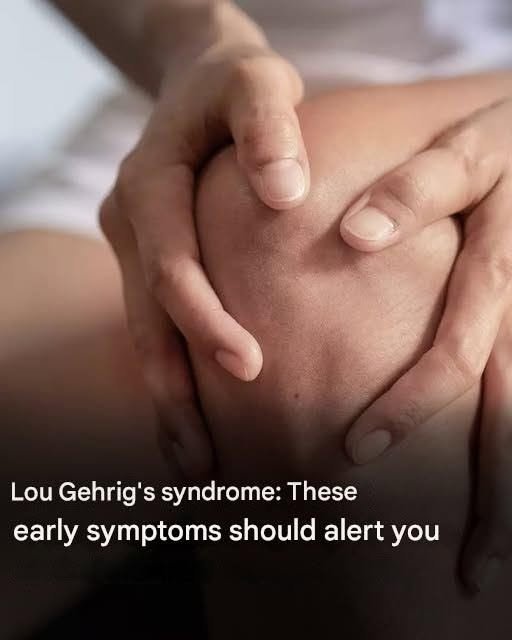
🧠 Lou Gehrig’s Disease: What Are the First Symptoms of ALS?
Lou Gehrig’s disease, or amyotrophic lateral sclerosis (ALS), is a progressive neurological disease that damages the motor neurons responsible for voluntary muscle movement. Early symptoms can vary substantially from person to person. (The ALS Association)
Common early symptoms
- Gradual muscle weakness — often beginning in one hand, arm, leg, foot or neck.
- Dropping objects or hand clumsiness — difficulty gripping, writing, buttoning clothes or using utensils.
- Tripping or difficulty walking — including a foot that seems to catch on the ground.
- Muscle twitching (fasciculations) — commonly noticed in the arms, legs, shoulders or tongue.
- Muscle cramps — persistent or unusual cramping can occur.
- Muscle stiffness or tightness — called spasticity.
- Slurred or slowed speech — sometimes ALS begins by affecting the muscles used for speaking.
- Difficulty chewing or swallowing — particularly in ALS that begins with “bulbar” symptoms. (NINDS)
- Fatigue or weakness in the arms or legs — especially when performing previously easy tasks.
- Uncontrollable laughing or crying — episodes can occur in some people with ALS. (The ALS Association)
⚠️ These symptoms don’t automatically mean ALS
Muscle twitching, cramps, weakness and difficulty walking have many possible causes, including conditions that are much more common and treatable. ALS cannot be diagnosed from a symptom checklist.
The characteristic pattern is progressive muscle weakness that continues to worsen, rather than symptoms that come and go. Diagnosis requires a medical evaluation, often including neurological examination and tests to rule out other conditions.
If you have new or progressively worsening weakness, particularly with muscle wasting, persistent twitching, or increasing difficulty speaking or swallowing, arrange an evaluation with a doctor or neurologist.
Important: Sudden weakness, facial drooping or sudden speech difficulty is more suggestive of a stroke, not typical slowly progressive ALS. Those symptoms require emergency medical attention.