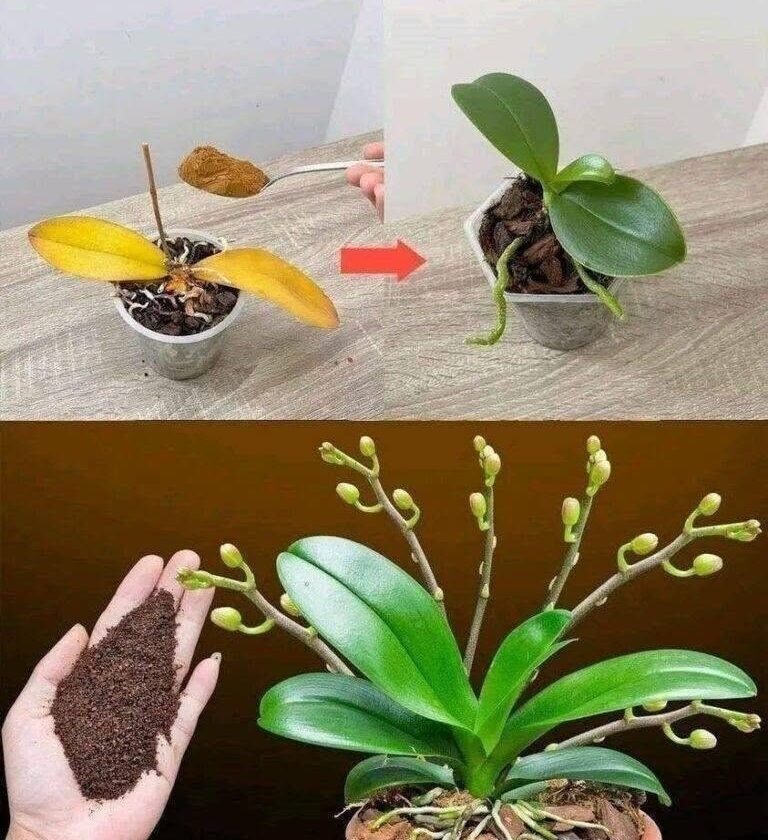
If you’re referring to the viral orchid-care claim “Just a teaspoon and your orchid suddenly blooms with lots of flowers,” there isn’t a magic teaspoon of household material that reliably makes an orchid produce abundant flowers.
What actually encourages orchid blooming
-
Bright, indirect light: Insufficient light is one of the most common reasons orchids produce leaves but few flowers.
-
Appropriate watering: Water thoroughly when the potting medium is approaching dryness, then allow excess water to drain. Don’t leave the roots sitting in water.
-
Orchid fertilizer: A properly diluted orchid fertilizer can provide nutrients needed for growth and flowering. Follow the product’s instructions rather than using an arbitrary teaspoon measurement.
-
Temperature differences: Many orchids, especially Phalaenopsis, can be encouraged to produce a flower spike by experiencing somewhat cooler nighttime temperatures for a period., honey, milk, coffee, rice water, cinnamon mixtures, and similar homemade remedies are often promoted as orchid bloom boosters. They aren’t established
-
Healthy roots and growing medium: Rotten or severely damaged roots can prevent good flowering.
-
Patience: Orchids naturally flower in cycles; even excellent care doesn’t produce flowers instantly.
Be cautious with viral “one-teaspoon” recipes
Sugar, honey, milk, coffee, rice water, cinnamon mixtures, and similar homemade remedies are often promoted as orchid bloom boosters. They aren’t established flowering treatments and can encourage fungus, bacteria, pests, or root problems if applied incorrectly.
A more accurate headline would be:
“One Simple Orchid-Care Tip That Can Help Encourage More Blooms”