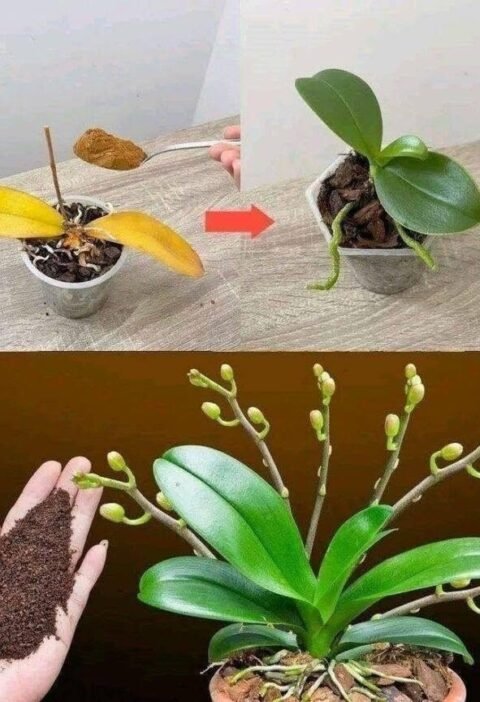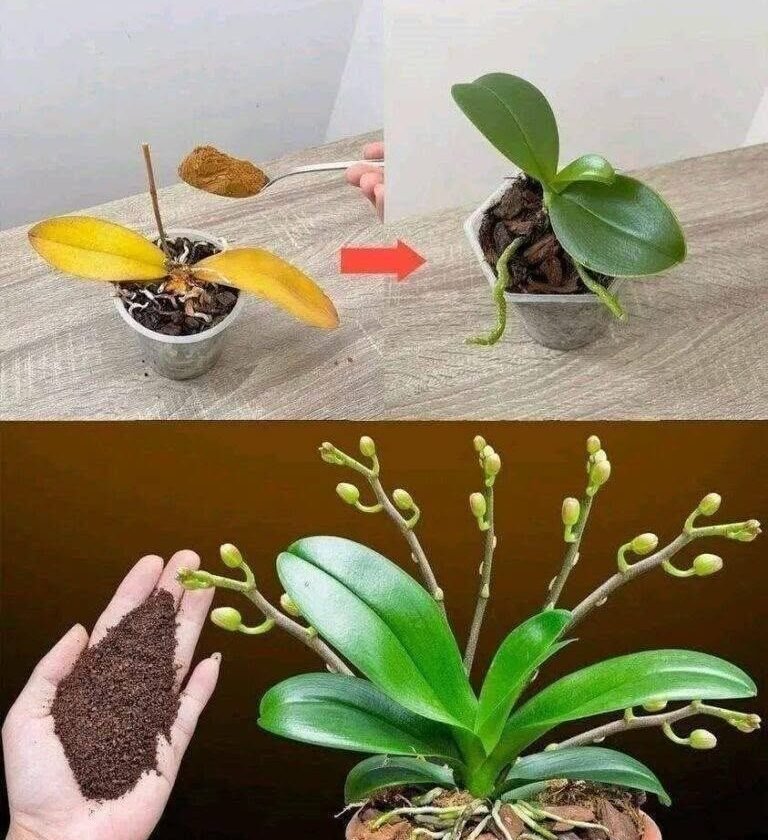
🌸 “Just One Teaspoon” to Make an Orchid Bloom? What Actually Works
There is no magic teaspoon of a kitchen ingredient that can make an orchid suddenly produce lots of flowers. Viral tricks often recommend sugar, cinnamon, baking soda, coffee, or other household ingredients, but applying them directly to orchid roots or potting media can cause problems.
🌱 To encourage healthy blooming
Give bright, indirect light. Insufficient light is one of the most common reasons an orchid produces leaves but doesn’t flower.
Water only when needed. Allow the growing medium to approach dryness before watering again. Don’t leave the roots sitting in stagnant water.
Use orchid-specific fertilizer when the plant is actively growing, following the product’s dilution instructions.
Ensure good drainage. Orchids generally need a loose, well-aerated growing medium rather than ordinary garden soil.
Provide a modest day/night temperature difference. For many common Phalaenopsis orchids, slightly cooler nighttime temperatures can help encourage flower spikes.
Be patient. Even a healthy orchid may take weeks or months to produce a new flower spike.
🥄 What about the “one teaspoon” trick?
Don’t put sugar, salt, vinegar, baking soda, or undiluted household ingredients into the orchid’s pot. They can disrupt the roots or growing medium and may encourage unwanted microbial growth.
If you tell me which ingredient the viral recipe recommends and whether your orchid is Phalaenopsis or another type, I can tell you whether it’s actually safe and how to use it properly.