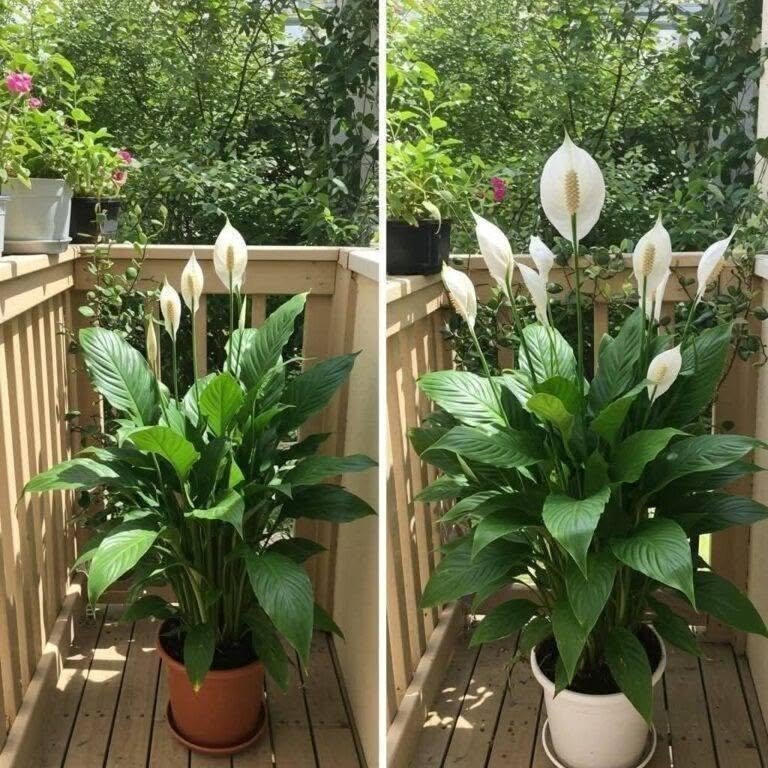
Viral gardening videos and clickbait plant care reels love to promise miracle hacks with catchy hooks like “Just 1 Cup Makes Peace Lily Bloom Like Crazy (Even the Ugly Ones)”—often featuring a mysterious kitchen concoction (like leftover coffee, rice water, or baking soda) that supposedly forces a struggling plant into a massive explosion of white flowers.
When horticulturists, botanists, and experienced plant care specialists look at how peace lilies (Spathiphyllum) actually grow and bloom, the reality is much more about fundamental botany than secret kitchen elixirs.
Here is what science and plant biology actually say about peace lily blooms, why miracle trick videos are misleading, and what it actually takes to get a stubborn plant to flower:
The Reality Behind the “Miracle Cup” Hacks
Most viral videos attribute a sudden flush of blooms to pouring a specific liquid into the soil. Here is what is really happening behind those claims:
-
The Placebo Effect of Regular Care: Often, the person trying the hack has neglected their plant, and deciding to pour “miracle water” on it means they are finally watering it consistently, giving it proper light, or wiping dust off its leaves. The plant recovers because of basic, consistent care—not because of the magic ingredient in the cup.
-
The Nutrient Illusion: While watering with diluted, balanced liquid fertilizer can provide helpful nutrients, dumping random kitchen liquids (like sugary coffee or pure vinegar) into a pot can actually harm the plant, alter soil pH, and attract fungus gnats or mold.
Why Your Peace Lily Isn’t Blooming
Peace lilies are beloved because they tolerate low indoor light well, but if they aren’t producing those iconic white bracts (spathes), it usually comes down to three environmental factors:
-
Not Enough Bright, Indirect Light:
-
While peace lilies survive in dark corners, they rarely bloom there. In nature, they grow under the dappled canopy of tropical rainforests. If yours is sitting in a dim room far from any window, it doesn’t have enough photosynthetic energy to produce flowers.
-
-
Incorrect Watering Habits:
-
Peace lilies are dramatic; they will droop completely flat when thirsty and perk right back up after a good watering. However, chronic underwatering or keeping the soil perpetually waterlogged stresses the plant, halting flower production.
-
-
Maturity and Dormancy:
-
Very young plants won’t bloom until they reach a certain level of maturity. Additionally, peace lilies naturally experience seasonal rest periods (usually fall and winter), during which they focus on foliage rather than blooms.
-
What Actually Makes a Peace Lily Bloom Like Crazy
If you want to encourage a peace lily to flower naturally and profusely, skip the viral gimmicks and focus on these evidence-based care steps:
-
Upgrade the Light: Move the plant closer to an east- or north-facing window, or anywhere it receives bright, indirect sunlight. (Avoid harsh, direct midday sun, which will scorch and yellow the leaves).
-
Feed During the Growing Season: During spring and summer (their active growing season), feed your peace lily every 4 to 6 weeks with a balanced, water-soluble houseplant fertilizer diluted to half-strength. Look for a fertilizer with a slightly higher phosphorus ratio, as phosphorus is the primary macronutrient responsible for root development and flower production.
-
Maintain High Humidity: Peace lilies are tropical rainforest natives. They love ambient humidity. Misting them regularly or placing the pot on a pebble tray filled with water helps keep the foliage lush and encourages blooming.
-
Use Filtered Water (If Needed): Peace lilies can be sensitive to heavy chemicals like fluoride and chlorine found in some tap water, which often shows up as brown, crispy leaf tips. If your tap water is heavily treated, letting it sit out overnight or using filtered water keeps the plant healthier and less stressed.
The Bottom Line
There is no magic cup of kitchen liquid that will instantly force an unhappy peace lily into a frenzy of white flowers. True blooming is simply a sign of a healthy, well-nourished plant that is receiving the right balance of bright indirect light, consistent moisture, and proper seasonal nutrients.