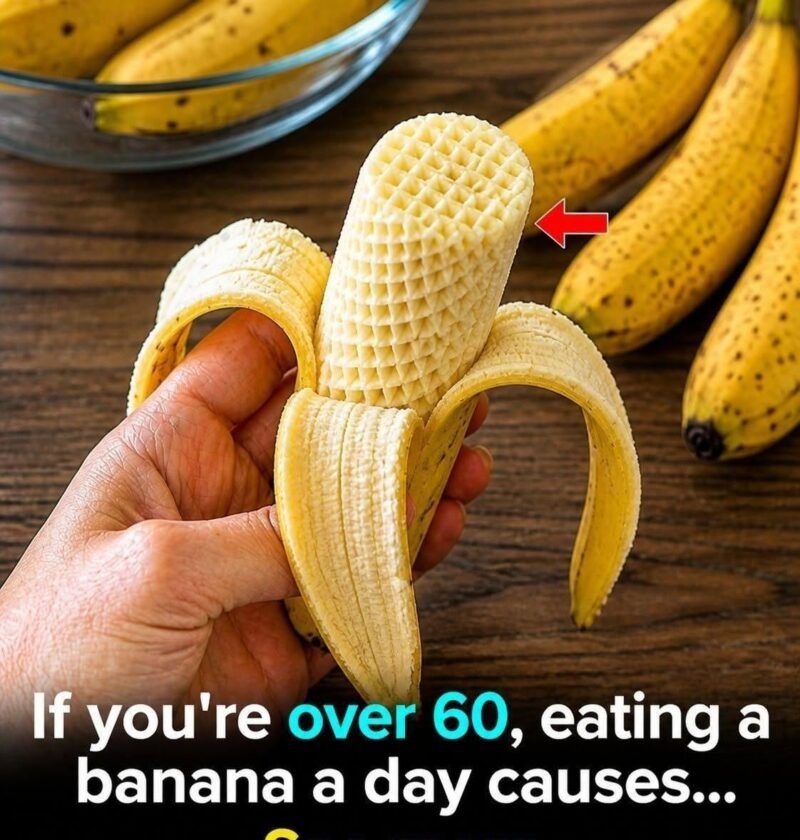
Clickbait headlines love to tease dramatic outcomes for simple habits, but what actually happens when an older adult eats a banana every day is far more grounded in everyday nutrition and physiology.
For the vast majority of people over 60, eating a daily banana is a healthy, convenient choice. However, the exact physiological impact depends heavily on an individual’s overall diet, kidney health, and medication list.
What Actually Happens in the Body
-
Support for Blood Pressure and Heart Health: A single medium banana provides roughly 420–450 mg of potassium. Potassium is an essential electrolyte that helps counterbalance sodium, easing tension in blood vessel walls and supporting a steady heart rhythm.
-
Improved Digestion and Regularity: Bananas contain both soluble fiber and resistant starch (especially if slightly firm or greenish), which feed beneficial gut bacteria and help prevent or manage age-related constipation.
-
Stable, Gentle Energy and B6 Support: Rich in Vitamin B6 and magnesium, bananas support nerve function, energy metabolism, and muscle contraction—helping to ward off everyday muscle fatigue or cramps.
Important Nuances to Keep in Mind
While bananas are nutrient-dense, there are a few medical contexts where a daily banana requires caution:
-
Medication Interactions (Hyperkalemia Risk): Many older adults take medications for high blood pressure or heart conditions—such as ACE inhibitors (e.g., lisinopril) or potassium-sparing diuretics (e.g., spironolactone)—which naturally increase potassium levels in the blood. Adding a daily high-potassium food like a banana without medical oversight can occasionally push potassium levels too high (hyperkalemia, which affects heart rhythm).
-
Kidney Function: The kidneys are responsible for filtering excess potassium out of the blood. If kidney function declines with age, the body cannot process high-potassium loads as efficiently, meaning dietary intake sometimes needs to be restricted.
-
Blood Sugar Management: A medium banana contains about 15 grams of natural sugars paired with fiber. While generally fine for most, individuals managing tightly controlled Type 2 diabetes should factor the carbohydrate content into their overall daily meal plan.
For someone with healthy kidneys and no interacting medications, a daily banana is a simple, heart-smart snack. If you have kidney disease or take blood pressure medications that alter electrolyte levels, it is always wise to check with your doctor or dietitian about your ideal daily potassium intake.