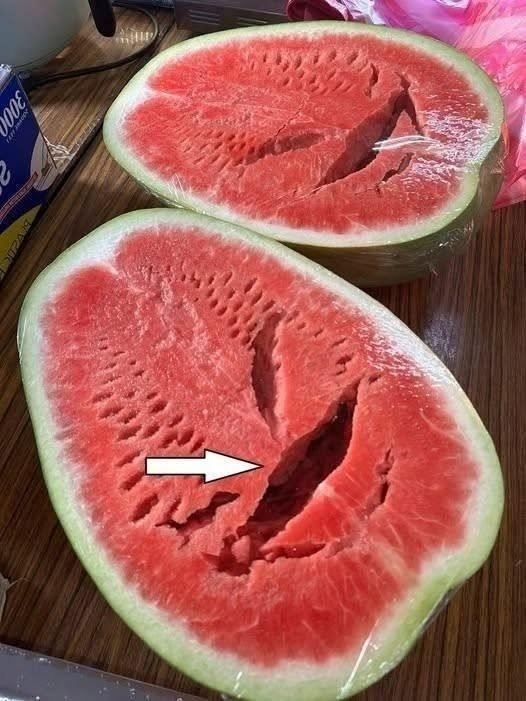
If you’re using “If You Open a Watermelon and See This…” as a health/food-safety topic, the key is to distinguish harmless natural features from signs that the fruit has spoiled.
🍉 If You Open a Watermelon and See This… Stop and Check Before Eating
1. Yellow or orange flesh
A watermelon isn’t always bright red inside. Yellow, orange, and even pale pink flesh can occur naturally, depending on the variety. Color alone doesn’t mean the watermelon is spoiled.
2. White or hollow areas
Small white streaks, firm pale patches, or a hollow-looking section can result from growing conditions. They may affect texture or sweetness but don’t automatically mean the fruit is unsafe.
3. Sprouting seeds
If you see a seed beginning to germinate inside the watermelon, it can happen in certain conditions. It’s unusual, but the sprout itself isn’t necessarily a sign of dangerous contamination. However, inspect the surrounding flesh carefully for spoilage.
4. A strange smell
This is much more concerning. A fresh watermelon should have a mild, fresh, slightly sweet smell. Sour, fermented, alcoholic, or rotten odors suggest that microorganisms have begun breaking down the fruit.
When in doubt, don’t taste it to “test” whether it’s good.
5. Slimy or mushy flesh
Softness can occur naturally as watermelon ages, but slimy, unusually mushy, or deteriorating flesh is a reason to discard it—particularly if accompanied by an unpleasant odor or discoloration.
6. Mold
Visible fuzzy mold—especially green, blue, black, or white fuzzy growth—means the safest choice is to discard the watermelon rather than simply cutting away the visible spot.
7. Dark, sunken, or rotten-looking patches
A small area of abnormal discoloration can sometimes result from physical damage, but widespread darkening, watery breakdown, or tissue that looks rotten is a warning sign.
The safest rule
Don’t judge a watermelon by color alone. Look at the combination of appearance, texture, and smell.
If the flesh looks normal, smells fresh, and has a normal firm texture, an unusual color or pattern may simply be a characteristic of that particular variety. If there’s mold, slime, significant decay, or a foul/fermented smell, throw it away.