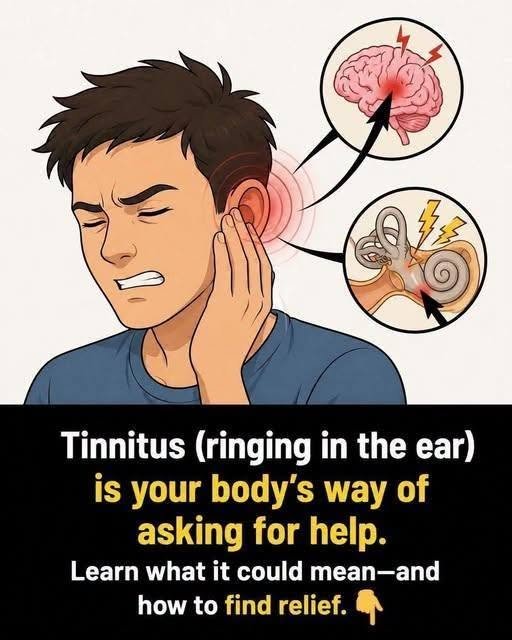
That “see more…” clickbait headline is a classic example of exploiting a very common, often harmless physical phenomenon to generate anxiety and clicks.
While persistent ringing in the ears—medically known as tinnitus—can sometimes point to an underlying medical issue, hearing it does not mean you are automatically destined for a catastrophic health event like sudden deafness or a brain tumor, which is usually what those sensationalized articles try to imply.
What Is Tinnitus, Really?
Tinnitus isn’t a disease in itself; it is a symptom generated within your auditory system. It can sound like ringing, buzzing, hissing, whistling, or clicking, and it can occur in one or both ears.
Most of the time, the real signs behind tinnitus are far more mundane and manageable than internet headlines suggest:
-
Noise-Induced Hearing Damage (The #1 Cause):
-
Exposure to loud noises—such as concerts, machinery, gunshots, or listening to music too loudly through headphones—damages the delicate microscopic hair cells in your inner ear. When these cells are damaged, they can “leak” random electrical signals to your brain, which interprets them as ringing.
-
-
Age-Related Hearing Loss (Presbycusis):
-
As people age, the gradual deterioration of nerve pathways and inner ear structures commonly brings on mild, chronic tinnitus.
-
-
Earwax Blockage:
-
A simple buildup of earwax can block the ear canal, altering pressure behind the eardrum and causing ringing or muffled hearing. This is easily fixed by a doctor or clinic.
-
-
Medication Side Effects:
-
Over 200 prescription and over-the-counter drugs (including high doses of aspirin, certain antibiotics, and diuretics) list tinnitus as a temporary or permanent side effect.
-
-
Stress, Fatigue, and Blood Flow:
-
High blood pressure, jaw issues (like TMJ disorders), and even high stress levels can amplify or trigger the perception of ringing.
-
When Should You Actually Worry?
While occasional, brief ringing (lasting a few seconds after a loud concert or during a moment of silence) is completely normal, you should consult an ear, nose, and throat (ENT) specialist or your primary care physician if:
-
The ringing is pulsatile (pulsing in sync with your heartbeat).
-
It occurs in only one ear and persists.
-
It is accompanied by sudden hearing loss, severe dizziness, or vertigo.
Have you been experiencing ringing in your ears lately, or did one of those clickbait teasers catch your eye while you were browsing?