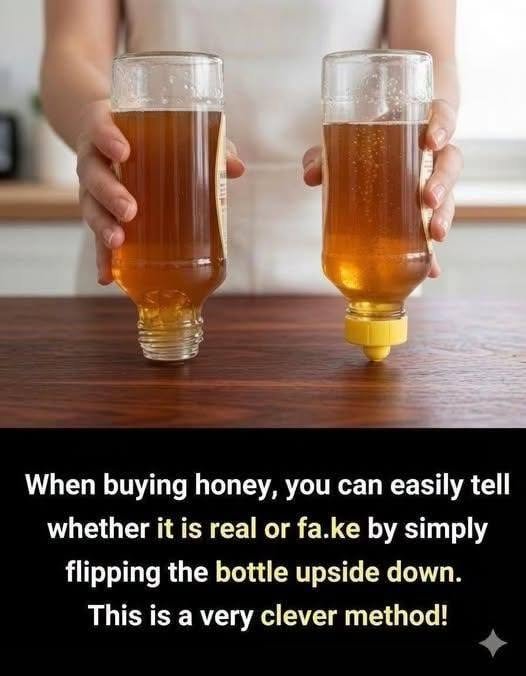
Checking whether honey is pure or adulterated (mixed with sugar syrup, corn syrup, or water) can easily be done right in your kitchen. While laboratory tests are the only 100% foolproof method, several simple, reliable home tests can help you spot fake honey.
Here are the most effective ways to test honey at home:
—
### 1. The Water Test (Dissolution Test)
* **How to do it:** Fill a glass with room-temperature water and add a tablespoon of honey.
* **Real Honey:** Pure honey is dense and thick. It will generally sink straight to the bottom of the glass in a lump or thick swirl and dissolve very slowly if stirred.
* **Fake Honey:** Adulterated or syrup-laced honey is usually thinner and will dissolve or mix into the water much more easily without holding its shape.
### 2. The Thumb Test (Consistency Check)
* **How to do it:** Put a small drop of honey on your thumb or the back of your hand.
* **Real Honey:** Pure honey is thick, sticky, and holds its shape. It won’t easily spill, drip, or run off your finger.
* **Fake Honey:** Fake honey is often watery and runny because of added sugar syrups or water, causing it to spread quickly or drip off.
### 3. The Flame Test (Combustibility)
* **How to do it:** Dip a clean cotton swab or matchstick into the honey, then try to light the tip of the swab with a lighter or match. *(Note: Ensure no dripping honey touches your skin or open surfaces).*
* **Real Honey:** Pure honey does not contain excess moisture (unless it has fermented). Because it has very low water content, it will catch fire and burn.
* **Fake Honey:** Fake or adulterated honey contains added moisture and water content, which will prevent the cotton from burning or cause a crackling/popping sound due to water evaporation.
### 4. The Paper Towel or Tissue Test
* **How to do it:** Place a few drops of honey onto a paper towel, napkin, or blotting paper.
* **Real Honey:** Because pure honey contains minimal water, it will sit on top of the paper towel and won’t soak through immediately.
* **Fake Honey:** If the honey has been diluted with water or sugar syrups, it will quickly saturate the paper towel, leave a wet ring, or soak straight through.
### 5. The Vinegar Test
* **How to do it:** Mix a tablespoon of honey with a little water and add a few drops of vinegar.
* **Real Honey:** Pure honey will not react to the vinegar (it won’t foam or fizz).
* **Fake Honey:** If the honey has been adulterated with chalk or certain artificial sweeteners, the mixture may fizz, foam, or bubble.
—
### Quick Shopping Tips to Avoid Fake Honey
* **Check the Ingredient List:** Pure honey should list only one ingredient: **100% pure honey**. If you see “glucose syrup,” “corn syrup,” or “high fructose corn syrup,” it is blended/fake.
* **Crystallization:** Over time, raw, pure honey naturally crystallizes (turns grainy or solid). If a jar of honey remains completely liquid indefinitely on your shelf, it may have been heavily processed, filtered, or mixed with corn syrup.
Have you noticed something unusual about a jar of honey you recently bought, or are you just curious about testing it?