🦶 If You Have These 9 Symptoms in Your Feet, It Could Be a Sign of Something Important
Your feet can sometimes provide clues about your overall health. However, a foot symptom rarely points to one specific disease by itself. Changes can result from everything from footwear and minor injuries to nerve, circulation, metabolic, or systemic problems.
Here are nine symptoms worth paying attention to:
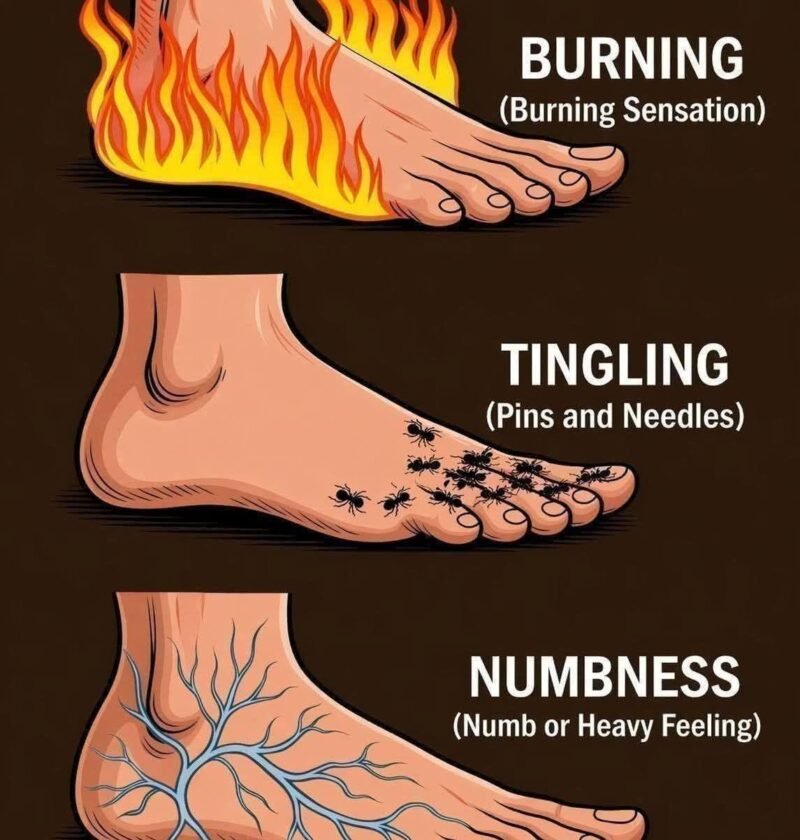
1. Persistent numbness or tingling
A “pins and needles” sensation that keeps returning can be associated with nerve irritation or peripheral neuropathy. Diabetes is one possible cause, but it isn’t the only one.
2. Burning feet 🔥
Persistent burning or unusual sensitivity may indicate nerve problems. It can also have other causes, so recurring symptoms deserve evaluation.
3. Unexplained swelling
Swollen feet or ankles can occur after prolonged standing or sitting, but persistent swelling may also be associated with vein problems, certain medications, or heart, kidney, or liver conditions.
4. Cold feet
Feet that are consistently unusually cold—particularly when accompanied by pain, numbness, or color changes—can sometimes indicate circulation problems.
5. Changes in skin color
Pale, bluish, or unusually dark skin on the feet can indicate circulation problems or other conditions. Sudden color changes accompanied by severe pain or coldness require urgent medical attention.
6. Slow-healing cuts or sores
A wound that doesn’t heal normally can be a warning sign of poor circulation, diabetes, infection, or impaired sensation.
7. Sudden or persistent foot pain
Pain without an obvious injury shouldn’t simply be ignored, especially if it persists, worsens, or interferes with walking.
8. Changes in the toenails
Thick, brittle, discolored, or distorted nails are commonly caused by fungal infections or trauma. In some circumstances, nail changes can accompany other health problems.
9. Loss of balance or difficulty walking
Problems with balance or walking can sometimes be related to nerve, muscle, joint, or neurological conditions and should be evaluated if they’re new or worsening.
🚨 When to seek help
Get urgent medical attention for a foot that suddenly becomes very painful, cold, pale/blue, severely swollen, or numb. Also seek prompt care for rapidly spreading redness, significant swelling, fever, or a wound that appears infected.
If you have diabetes, pay particular attention to foot wounds, blisters, color changes, numbness, and infections because reduced sensation and circulation can make foot problems more serious.
The important takeaway
Your feet can provide useful health clues, but there is no single list of nine foot symptoms that diagnoses a particular disease. Persistent or unexplained changes are best evaluated in context by a healthcare professional rather than diagnosed from a social-media checklist.