If You Have These 9 Symptoms in Your Feet, Don’t Ignore Them 🦶
Foot symptoms can sometimes provide clues about your health, but no single foot symptom can diagnose a disease. Many have simple explanations such as footwear, overuse, or minor injuries.
Here are 9 changes worth paying attention to:
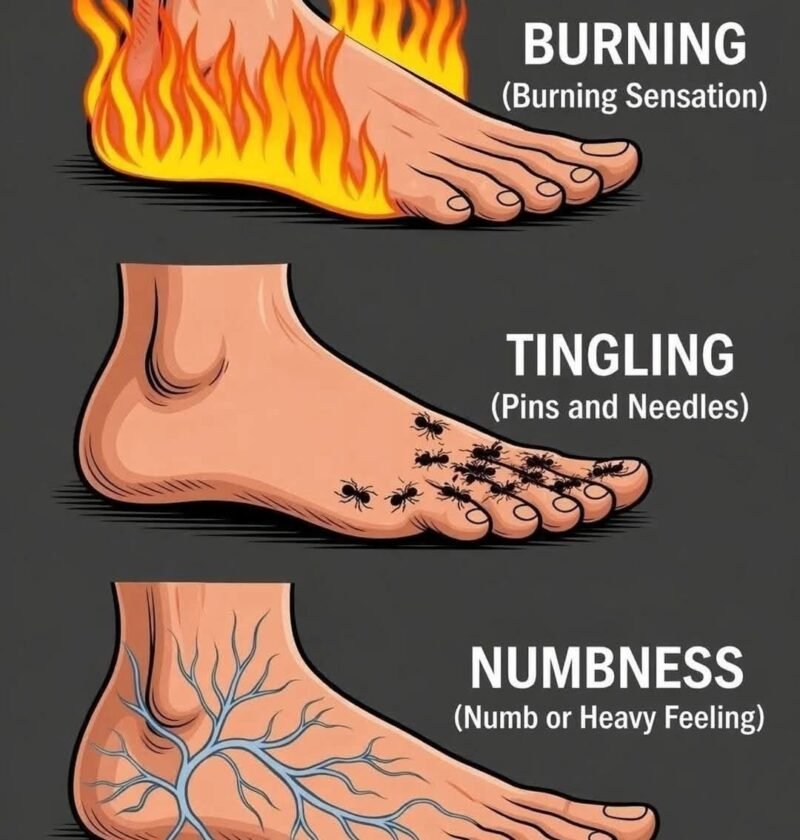
- Persistent numbness or tingling — can occur with nerve problems, including peripheral neuropathy.
- Burning pain — may also indicate nerve irritation or neuropathy.
- Swelling in the feet or ankles — can have many causes, from prolonged standing to medication effects or heart, kidney, or liver problems.
- Cold feet — sometimes related to poor circulation, although cold feet can also occur normally.
- Changes in skin color — unusually pale, bluish, or darkened skin deserves assessment, especially if it appears suddenly.
- Slow-healing cuts or sores — particularly important for people with diabetes or circulation problems.
- Persistent foot pain without an obvious injury.
- Weakness or difficulty walking — can indicate a neurological or musculoskeletal problem.
- Changes in the toenails or skin — such as thickened, discolored nails or persistent cracks and scaling, which may indicate fungal infection or another skin condition.
🚨 Get urgent help for sudden changes
A foot or leg that suddenly becomes very painful, cold, pale/blue, numb, or weak can indicate a serious circulation problem and requires emergency don’t ignore a new foot wound, blister, redness, swelling, or loss of sensation—foot problems can become serious evaluation.
Likewise, one-sided swelling, warmth, redness, and pain can be symptoms of a blood clot, particularly if accompanied by chest pain or shortness of breath.
If you have diabetes, don’t ignore a new foot wound, blister, redness, swelling, or loss of sensation—foot problems can become serious more quickly.