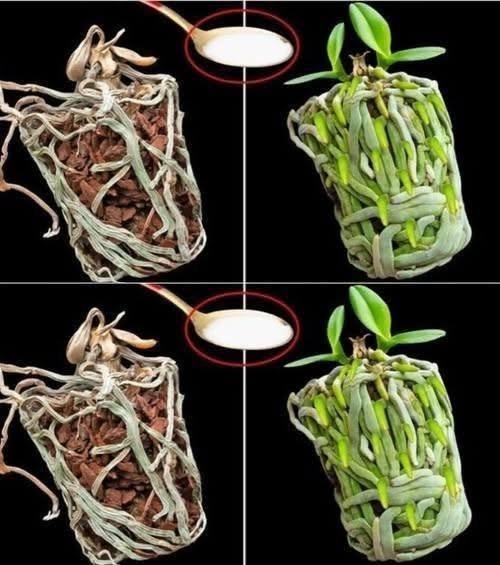
What Those Viral “One-Teaspoon” Orchid Hacks Actually Do
| Viral “One-Teaspoon” Ingredient | What Clickbait Promises | What Actually Happens to the Orchid |
| Cinnamon powder | “Stimulates explosive root growth overnight” | Cinnamon has mild natural antifungal/drying properties—useful as a light dusting only on freshly trimmed leaf cuts to prevent rot, not on roots (dusting roots dries out healthy velamen and blocks water uptake). |
| Baking soda or vinegar | “Balances pH and triggers new root shoots” | Alters potting-media pH abruptly and leaves salt buildup that burns sensitive orchid root tips. |
| Garlic water, rice water, or yeast/sugar | “Feeds root microbes and forces roots out” | Leaves starches and sugars in the bark that ferment, attract fungus gnats, and fuel bacterial/fungal root rot—the exact opposite of what a stressed orchid needs. |
| Epsom salt (magnesium sulfate) | “Miracle root booster” | Supplies magnesium and sulfur if a plant is deficient, not rooting hormones; overdoing salts burns dehydrated roots that cannot flush minerals out properly. |
How to Actually Revive a Dried-Out Orchid & Encourage New Roots
-
Inspect and trim dead roots cleanly: Remove the orchid from its pot, shake off old broken-down bark, and soak the roots in lukewarm water for 10–15 minutes. Healthy roots turn plump and green (or firm white/yellow inside the pot); trim off only roots that stay flat, papery, hollow, or mushy brown using sterile scissors.
-
Repot into fresh, chunky orchid bark (never regular potting soil): Use a clear slotted pot filled with coarse fir/pine bark chips (optionally mixed with a small amount of sphagnum moss or perlite). Regular garden soil suffocates orchid roots within weeks.
-
Water by soaking, then let it drain completely: Once a week (or whenever the roots inside the clear pot turn silvery-gray and the pot feels light), soak the pot in room-temperature water for 15–20 minutes, drain every drop, and never let the pot sit in standing water.
-
Give bright, indirect light and gentle humidity: Place the orchid near an east- or bright north-facing window (filtered sunlight, no harsh midday sun) at 20–27°C (68–80°F) with good airflow; new root tips typically emerge over 3 to 8 weeks once hydration and light stabilize.